HBCU Bands: History, Style, and the Most Celebrated Programs

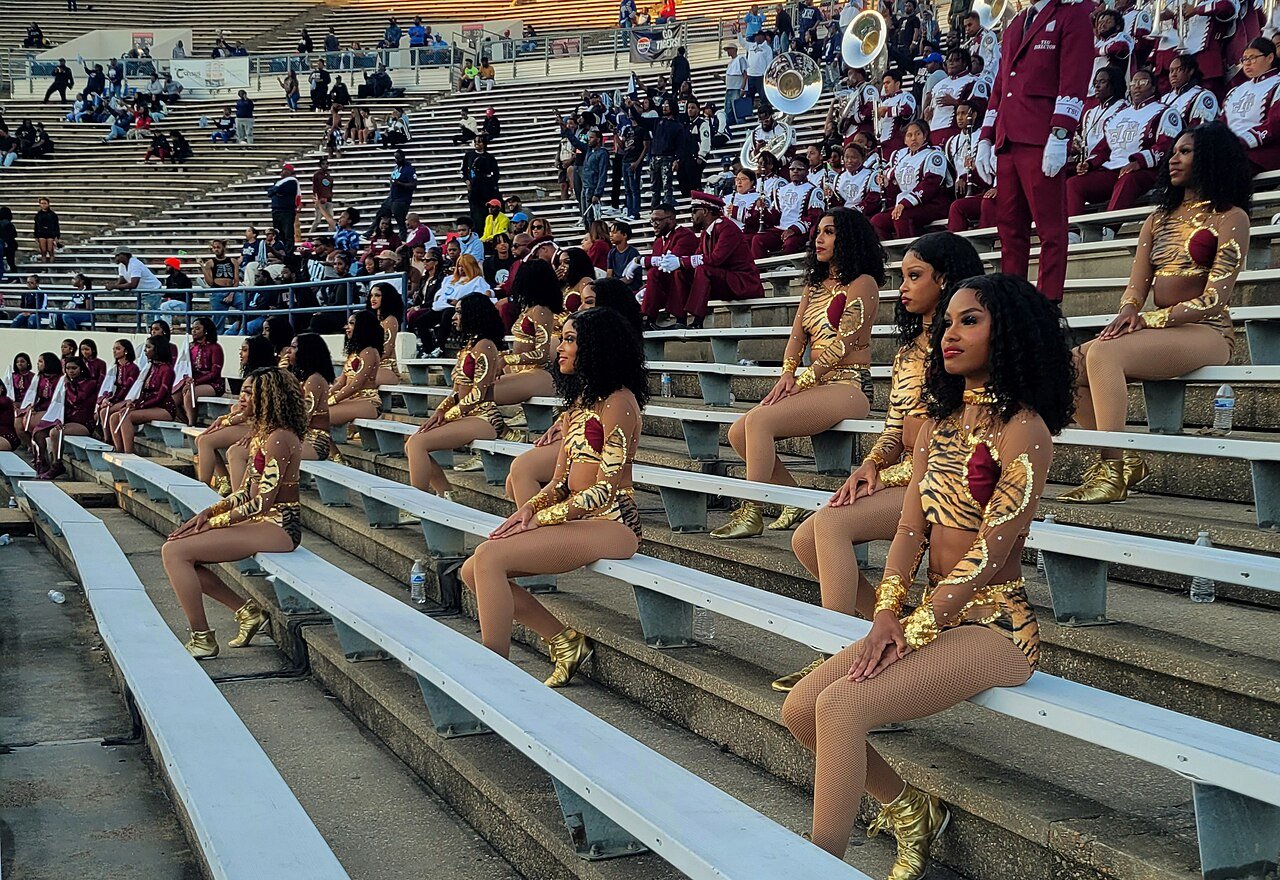
HBCU bands are the marching bands of historically Black colleges and universities, known for a high-energy “show style” that blends precision drill, brass-heavy sound, and full-out dance. At many schools the halftime performance draws as much attention as the football game, and on some campuses band members are more visible than the athletes. This guide covers what an HBCU band is, how the tradition started, what makes the style distinct, and the programs most often named among the best.
What is an HBCU band?
An HBCU band is a marching band sponsored by a historically Black college or university. The distinctive HBCU style originated in the American South in the 1940s, blending earlier traditions of military music and minstrel-era performance with a repertoire built on popular songs of the day. From the start the bands played a central role in building school pride and camaraderie, and they remain one of the loudest expressions of campus identity.
The history of HBCU bands
The roots reach back to early American military music, which recruited large numbers of Black musicians. A 1738 statute passed by the Virginia House of Burgesses required military service from “free mulattos, blacks, and Native Americans,” but barred them from carrying arms, so they served as drummers, fifers, and trumpeters. That military-music tradition carried into the civilian brass bands that formed after the War of 1812, especially in New Orleans.
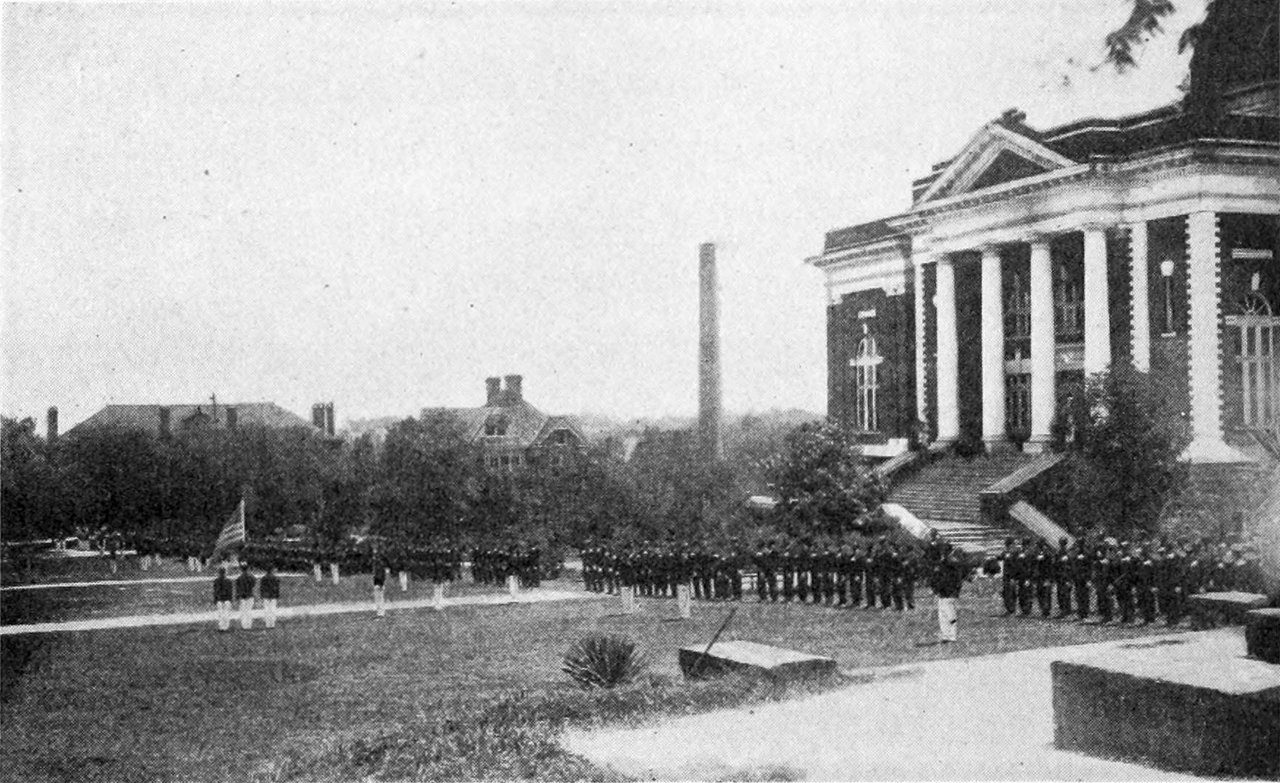
The first band at an HBCU was established in 1890 at what is now Tuskegee University, initially under student direction. In 1907 the school appointed its first professional director, retired U.S. Army Major Nathaniel Clark Smith. At Alabama A&M, early director W.C. Hardy, a former minstrel-show musician, began mixing popular songs into the marches, an approach that later spread widely.
The modern show style, where high-stepping marching met popular music and elaborate dance, has been traced to Florida A&M University in the 1940s. Beginning in 1952, Grambling State University under director Conrad Hutchinson built a reputation for extravagant performances that other HBCU bands soon copied. Tennessee State University then made national history: its band was the first HBCU band to appear on national television, during a 1955 Chicago Bears game, and in 1961 it became the first to march in a presidential inauguration, for John F. Kennedy. Grambling’s band played the halftime of Super Bowl I in 1967, a show later ranked among the top 10 Super Bowl halftime performances by Sports Illustrated.
What makes the HBCU band style different
HBCU bands perform in what is called show style, a version of the high-step marching popularized by Big Ten bands with an added upper-body swing. On the field they move through geometric drill built on a four-person squad system, drawn from former Purdue director Bill Moffit’s method, and break the formations with energetic dance routines known as breakdowns. The instrumentation privileges brass to create a brighter, louder tone, and snare drummers usually play a traditional military-style sling drum rather than the harness drum common elsewhere.
The repertoire leans on the popular music of the moment, lately a heavy dose of R&B and Hip Hop. Bands trade short musical phrases called “punches,” and much of the culture has its own vocabulary: performances are “battles,” an energized crowd is “house” that a band tries to “win,” and playing a punch is called “throwing” it. Drum majors are performers in their own right, a role closer to entertainer than the time-keeping drum majors of other bands.
The most celebrated HBCU marching bands
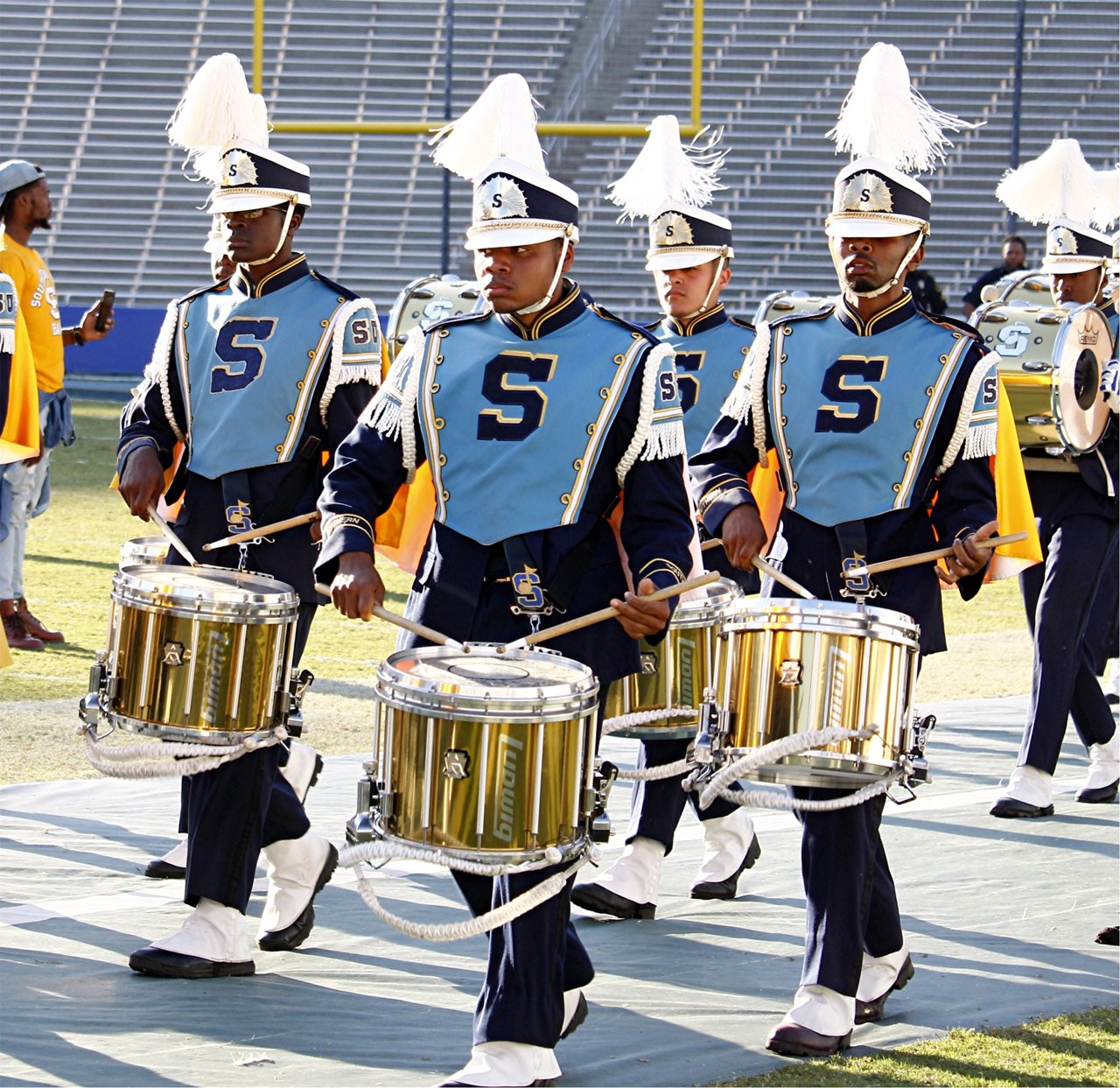
Ranking HBCU bands is a subjective exercise, but a handful of programs turn up on nearly every list. The table below pairs each band with its school and what it is best known for.
| School | Band name | Known for |
|---|---|---|
| North Carolina A&T | Blue and Gold Marching Machine | Sharp formations and the “Cold Steel” drumline; Macy’s Thanksgiving Day Parade |
| Florida A&M | Marching 100 | A legacy dating to 1946 and performances at presidential inaugurations |
| Tennessee State | Aristocrat of Bands | First HBCU band at a presidential inauguration; first collegiate band to win a Grammy, in 2023 |
| Norfolk State | Spartan Legion | A precise, powerful drumline and horn section |
| Bethune-Cookman | Marching Wildcats | A smooth, disciplined style dating to 1930 |
| Southern University | Human Jukebox | Soulful brass paired with tight choreography |
| Texas Southern | Ocean of Soul | A full-bodied sound and a recognizable brass section |
| Jackson State | Sonic Boom of the South | Thunderous sound and intense drum majors |
| Alabama State | Mighty Marching Hornets | Contemporary hits fused with traditional marching |
| Prairie View A&M | Marching Storm | Powerful sound and “The Box” drumline |
Battle of the Bands and where to see them
The showdowns are a spectacle of their own. The Honda Battle of the Bands is a long-running annual invitational exhibition held each winter. Since 2019 the National Battle of the Bands in Houston has grown into one of the best-attended showcases in the country, drawing more than 40,000 fans to NRG Stadium each August to watch six to eight bands perform. In 2017, ESPN launched its HBCU band rankings covering the MEAC and SWAC conferences, and outlets like Band of the Year publish their own polls, with Florida A&M, Norfolk State, North Carolina A&T, and Southern near the top of the 2025 list.
HBCU bands in pop culture
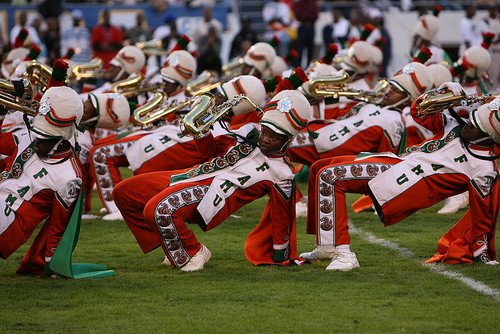
The tradition has reached well beyond the stadium. The 2002 comedy film Drumline followed a student in an HBCU-style band and introduced the culture to a wide audience, with a television sequel, Drumline: A New Beat, premiering on VH1 in 2014. If you want to keep going, our roundup of the best HBCU movies and shows covers more of the on-screen moments. The bands are also woven into the wider culture of the yard on game days, alongside Divine Nine strolls and the social life described in our guide to HBCU yard culture. And in 2023 Tennessee State’s Aristocrat of Bands took the tradition to the record books as the first collegiate marching band to win a Grammy.
FAQs
Which HBCU has the best band? There is no single answer, since it depends on the year and the judge. Ranking systems such as ESPN’s HBCU band rankings and Band of the Year regularly place Florida A&M, Southern, Norfolk State, North Carolina A&T, and Jackson State near the top, and Band of the Year’s 2025 list opened with Florida A&M.
What colleges have HBCU bands? Many do. Well-known programs include Southern, Grambling State, Tennessee State, Norfolk State, Texas Southern, South Carolina State, North Carolina A&T, Jackson State, Florida A&M, Bethune-Cookman, Alabama State, Prairie View A&M, Howard, and Hampton, among others.
Who has the largest HBCU band? Programs like North Carolina A&T’s Blue and Gold Marching Machine and Florida A&M’s Marching 100 are frequently cited among the largest and most powerful, though exact sizes shift from season to season.
What HBCU band won a Grammy? Tennessee State University’s Aristocrat of Bands, which in 2023 became the first collegiate marching band to win a Grammy.
If you show up to represent your school, browse Ireishprint’s custom HBCU and Greek apparel to rep your band and your yard in style.