
Groove Phi Groove Social Fellowship: A Complete Guide


Most rundowns of Black Greek life stop at the nine. Groove Phi Groove Social Fellowship, Incorporated does not show up on that list, and the fellowmen are fine with that. They were never trying to be the tenth.
Founded on October 12, 1962, at Morgan State College in Baltimore, Groove was built as an alternative to the established fraternal scene, not an imitation of it. Sixty-plus years later it is still around, still pushing service and brotherhood, and still working off a name and a symbol that most newcomers misread the first time they see it.
How Groove Phi Groove Started at Morgan State
In the fall of 1962, fourteen young Black men at Morgan State College decided they wanted something different from what the campus fraternal organizations were offering. They were not against fraternities. They were against what they described as the traditionalism that came attached: the rituals, the social hierarchy, and the ascribed prestige that came with letters rather than with what a brother actually did in the community.
On October 12, 1962, they chartered Groove Phi Groove as a social fellowship instead of a fraternity. The choice of word was deliberate, and it would shape everything that came after. Before Morgan State formally recognized the new organization as a student group, the founders had already moved across state lines and chartered a second chapter at Delaware State. Chapters at Allen, Benedict, Claflin, Johnson C. Smith, Lincoln University in Pennsylvania, North Carolina Central, South Carolina State, and Virginia Union followed. By the time the expansion ended, Groove had chartered more than 135 collegiate chapters across the country.
The 14 Pearls Who Founded the Fellowship
The founders are called the 14 Pearls, and every fellowman knows the names:
- Glen Brown
- Raymond Clark
- John Edward Conquest
- Walter Edwin Goodwin
- Barry H. Hampton
- James L. Hill
- Charlie Johnson
- Nathaniel Monroe
- David Nesbit
- Nathaniel Parham Sr.
- Harry Payne
- Barry Simms
- Robert E. Simpson
- Woodrow Anderson Williams
The fourteen pearls that edge the Groove shield are a direct reference to these men. The shield, the sword, and the spear all carry that founding memory forward, which is why the organization treats them as more than decoration. The Black Past entry on Groove traces the founders’ intent in detail and remains the most cited secondary source for the early years.
Why Fellowship, Not Fraternity
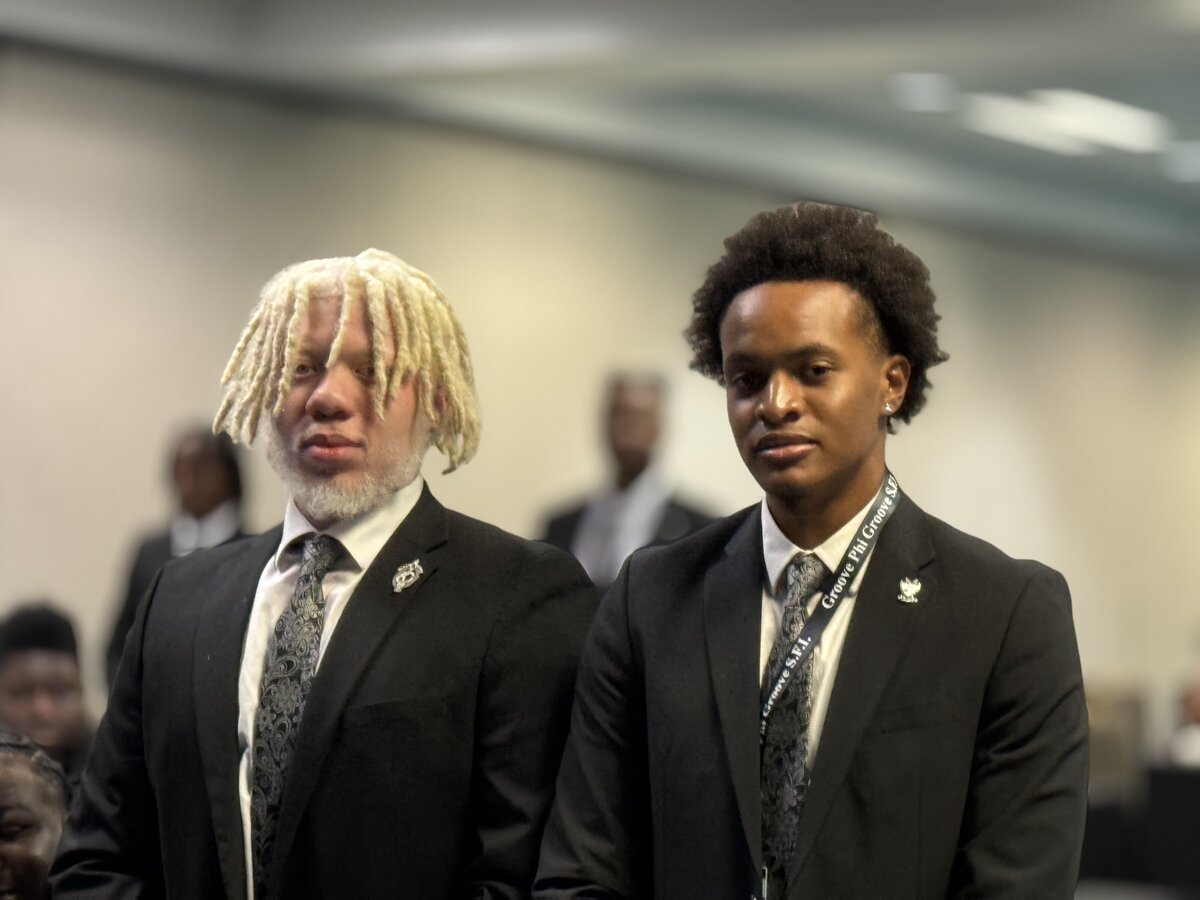
Groove Phi Groove is not a fraternity, and that is not a technicality. It is the entire point. The founders chose social fellowship because they wanted a brotherhood organized around what members did together for their communities, not around being inducted into a Greek-letter house. Members are called fellowmen rather than brothers, and pledges are called swanXmen.
The name itself reinforces the distance from the more familiar Black Greek-letter system. The word groove was 1960s slang for smooth, quick, and skillful, and the founders used it intentionally to signal that they were working against the establishment while still socializing and fellowshipping with purpose. The symbol that looks like the Greek letter Phi is not actually Greek. It is the Khemit symbol from ancient Egypt for the male reproductive system, often described as the fire of life. The shape is identical to the Greek Phi, but the founders made a point of telling people the meanings were not.
Symbols, Colors, and the Sword and Spear
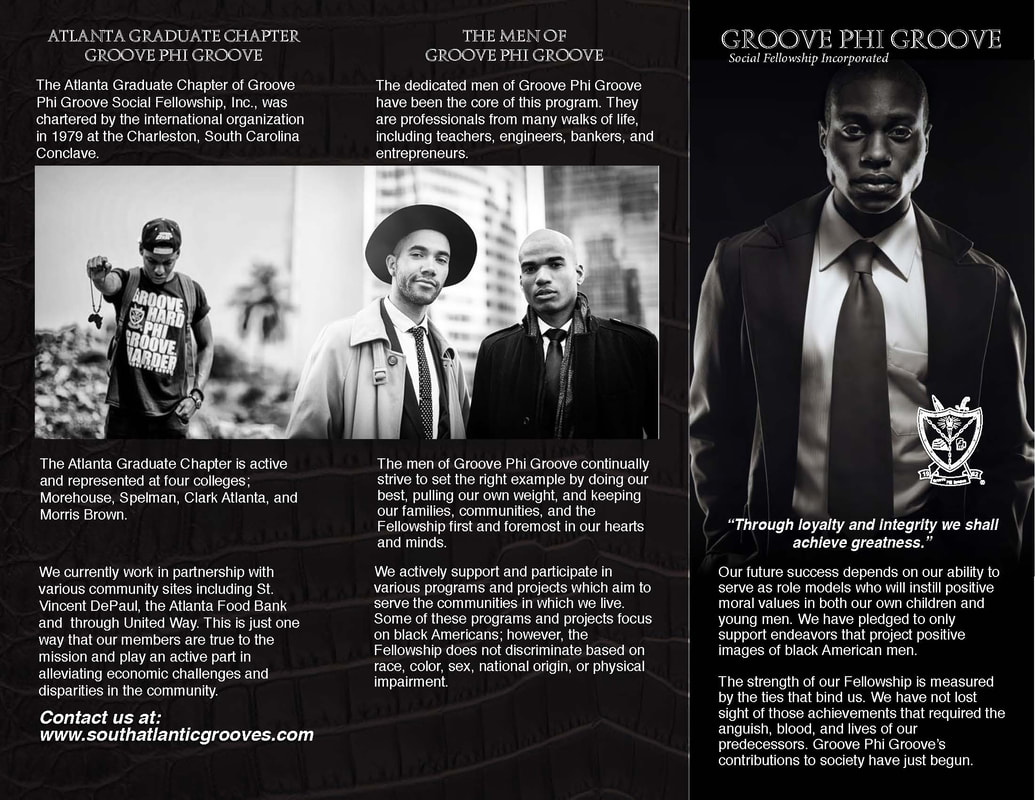
Groove’s coat-of-arms is a shield set over a crossed sword and spear, with three chains dividing the shield into three sections that carry a beer mug, a stack of books, and a torch. Each element on the shield maps to a principle the founders wanted future fellowmen to live by:
- Sword: courage
- Spear: endurance
- Book: knowledge among college men
- Mug: fellowship
- Chains: unification of the brotherhood
- Torch: everlasting light
- Fourteen Pearls: the founders
The colors are black, for race, and white, for purity. The motto reads, “Through loyalty and integrity, we shall achieve greatness.” The official publication is The Sword & Spear, which keeps the founding imagery in front of the membership in every issue. Members go by Grooves or G-Phi-G in casual reference, but in print the fellowship name is always written out in full.
How to Become a Fellowman
Collegiate candidates need to have completed twelve credit hours with a cumulative grade point average of 2.5 to be eligible for membership. Graduate candidates need a degree from a four-year college, a two-year college, a community college, or a business school. Membership is by mutual selection, which means a chapter recruits the candidate and the candidate accepts the chapter.
One of the unusual policies at Groove is that dual membership is allowed. A fellowman can also hold membership in academic and honor societies, and in general fraternal orders such as the Benevolent and Protective Order of Elks, the Freemasons, and the United States Junior Chamber. That openness is consistent with the original founding vision: Groove was never built to compete with other affiliations, only to add a layer of conscious brotherhood that the founders felt was missing on historically Black college campuses at the time.
Service Programs and Brothers Building Brothers
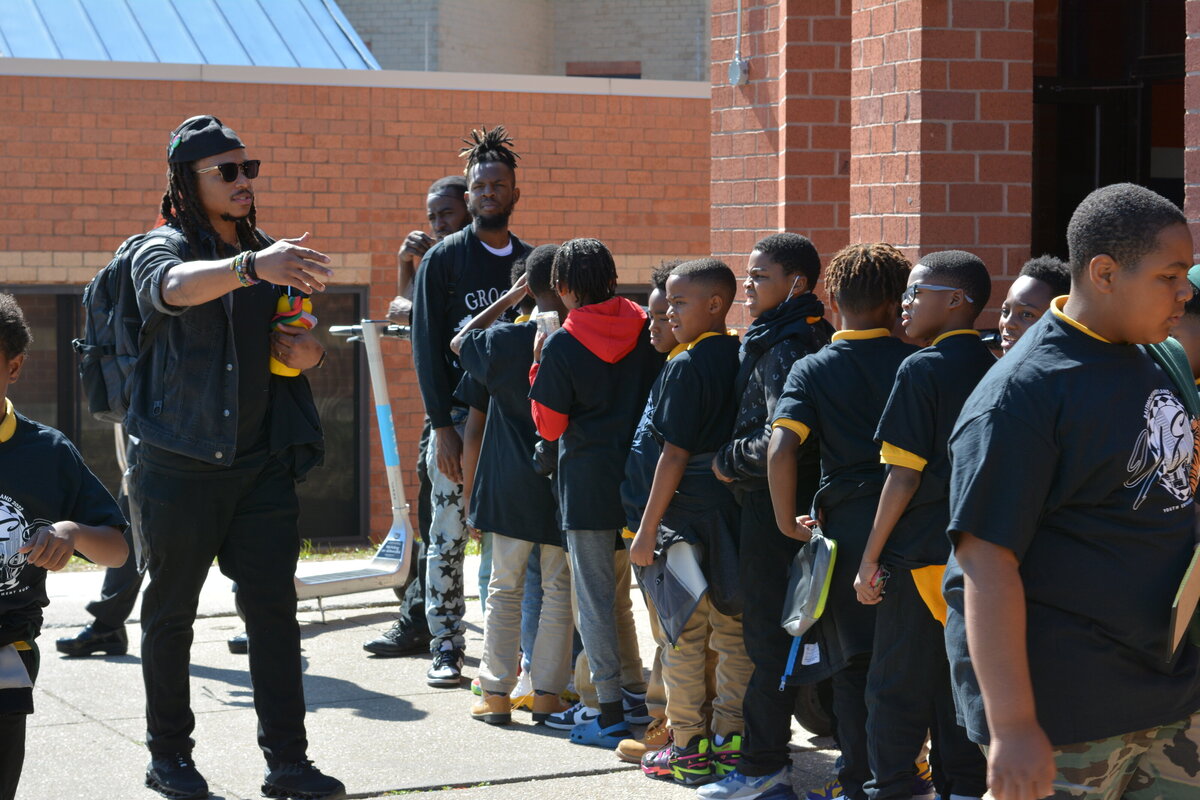
Groove was founded on service, and the organization treats philanthropy as core rather than peripheral. National partnerships have included the Boy Scouts of America, Missing Children, the NAACP, the National Urban League, and the United Negro College Fund. In 2012 the fellowship established The Groove Fund, Incorporated, a 501(c)(3) charitable entity that runs scholarships and a tutoring program. The Groove Community Foundation, another 501(c)(3), backs the Groove Leadership Academy, which the current administration treats as its flagship mentorship initiative.
The current 12th International President frames the work with a phrase that has become a Groove watchword: “Brothers Building Brothers.” Alumni take an active role in shaping undergraduate members, drawing on Surah Al-Baqarah 2:269 and Luke 12:48 as guideposts: to whom much is given, much is required. Beyond formal philanthropy, Groove chapters are also known for step dance and a cappella performances, both of which trace back to founding-era cultural expression on Black campuses.
Notable Fellowmen Who Carried the Name
For an organization that does not chase visibility, the membership roll runs long on impact. Earl “The Pearl” Monroe took Groove ideals into the NBA with the Baltimore Bullets and the New York Knicks, eventually entering the Naismith Memorial Basketball Hall of Fame. Donnie Shell won four Super Bowls with the Pittsburgh Steelers and was later inducted into the Pro Football Hall of Fame. G.K. Butterfield served in the United States House of Representatives representing North Carolina, and Douglas Palmer served as the long-running mayor of Trenton, New Jersey. Clarence “Tiger” Davis sat in the Maryland House of Delegates from 1983 to 2007. Sylvester “Junkyard Dog” Ritter became one of the most recognized professional wrestlers of his era after playing football for the Houston Oilers, and Richard Huntley ran behind NFL offensive lines for the Steelers and the Falcons. The list also includes Chet Grimsley, Kamal Johnson, and Spider Bennett, all professional athletes, and Ralph C. Johnson of the North Carolina House of Representatives.
Where Groove Stands After Sixty Years
By 2022 Groove had initiated more than 60,000 lifetime members and chartered over 200 college and graduate chapters worldwide, with 135 of those at the collegiate level. In December 2012 the organization purchased a property at 2453 Maryland Avenue in Baltimore as its international headquarters, dedicating the building on July 1, 2013. The fellowship continues to host its annual international conclave, often jointly with its sister organization Swing Phi Swing, where the executive board is elected and the directorate sets the national agenda.
The active chapter count has shrunk since the 1990s peak of 100 collegiate plus 50 graduate chapters. As of 2025 the organization runs five active college chapters and five active graduate chapters, with the rest in revitalization. That contraction is part of why the current presidency leans so heavily on the Groove Leadership Academy and the Brothers Building Brothers framework. The work right now is rebuilding the pipeline that made the fellowship distinctive in the first place: undergraduates who are taught early that the letters on the shield only matter if you put in the service behind them.