
Sigma Gamma Rho Sorority: A Complete Guide to History, Traditions, and Culture

Sigma Gamma Rho Sorority, Incorporated, known on yards across the country as SGRho, began with seven Black women educators at Butler University in 1922 and grew into a global service organization with members in nearly a dozen countries. Its story is also the story of how a sorority founded at a predominantly White institution became a permanent fixture inside the National Pan-Hellenic Council. This guide walks through the Indianapolis founding, the seven women remembered as the Pearls, the decade by decade service record, the symbols and traditions, and the culture that keeps royal blue and gold alive on every campus where SGRhos walk.
The Founding of Sigma Gamma Rho at Butler University
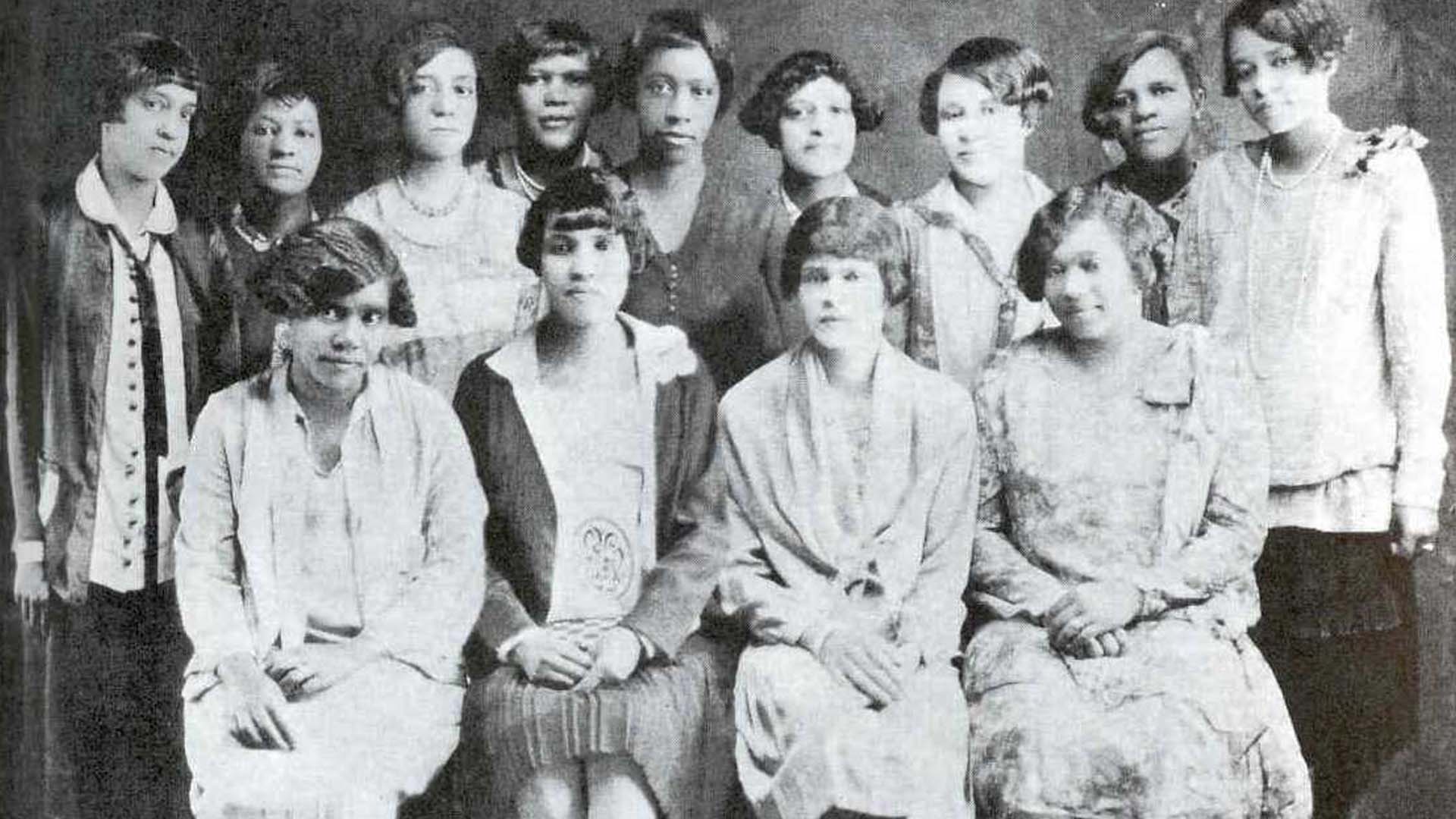
Sigma Gamma Rho was founded on November 12, 1922, in Indianapolis, Indiana by seven African American educators. The Sorority was incorporated within Indiana the same month with legal guidance from attorney Robert Lee Brokenburr, giving it the formal structure to operate as a professional organization for schoolteachers. On December 30, 1929, a charter was granted to the Alpha chapter at Butler University, and Sigma Gamma Rho became an incorporated national collegiate sorority. That charter is what makes SGRho the only historically African American sorority in the National Pan-Hellenic Council founded at a predominantly White institution rather than Howard University.
The Sorority joined the National Pan-Hellenic Council in 1937, the umbrella organization for the nine historically Black Greek-letter organizations that the public now calls the Divine Nine. NPHC itself was established on May 10, 1930, at Howard University, with Matthew W. Bullock as Chairman and B. Beatrix Scott as Vice-Chairman, and was incorporated under Illinois law in 1937, the same year SGRho came in.
The Seven Founders and Robert Lee Brokenburr
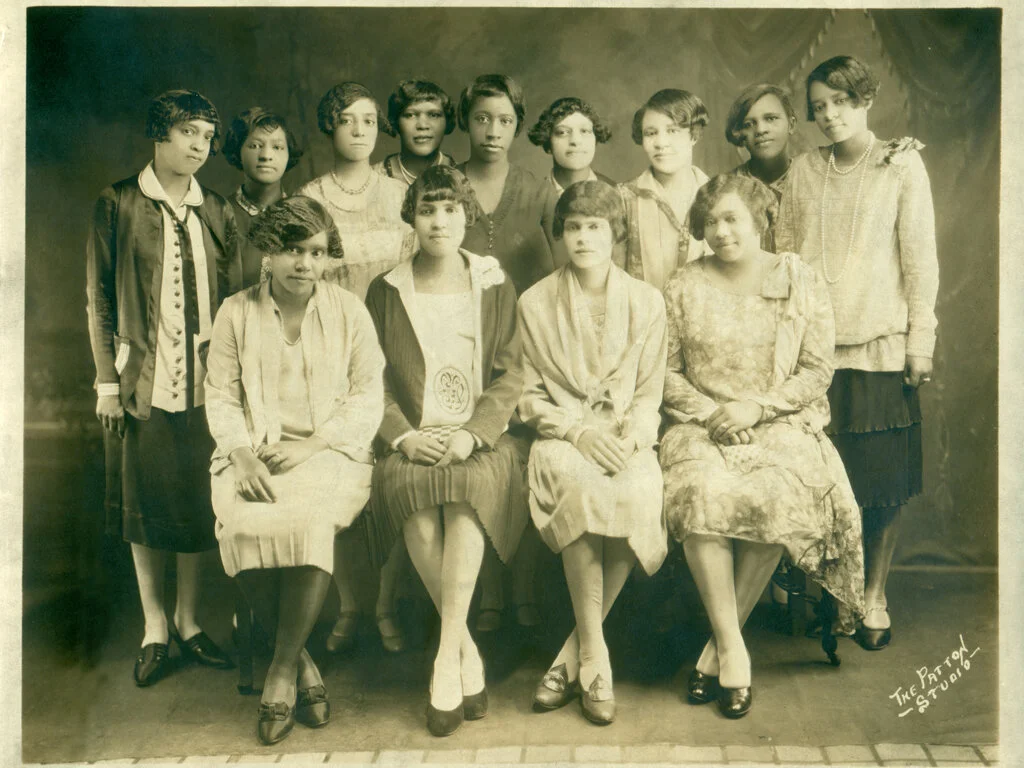
The Seven Pearls are honored at every Founders Day:
- Mary Lou Allison Gardner Little
- Dorothy Hanley Whiteside
- Vivian Irene White Marbury
- Nannie Mae Gahn Johnson
- Hattie Mae Annette Dulin Redford
- Bessie Mae Downey Rhoades Martin
- Cubena McClure
Attorney Robert Lee Brokenburr is named alongside the founders for shepherding the 1922 incorporation through Indiana law, a procedural step that gave Sigma Gamma Rho the permanence to expand beyond Indianapolis. The seven women themselves were classroom teachers, and the original mission was professional support for educators before it broadened into the service organization the public sees today.
A Century of Service, Decade by Decade
SGRho reads as a service record more than a social one. The official chronology marks a major initiative in nearly every era of the Sorority.
The 1920s and 1930s
The Sorority’s official publication, The Aurora, was established in 1927 by Blanche Stewart, and it still carries the institutional record of the organization. After the 1929 national charter and the 1937 entry into the National Pan-Hellenic Council, SGRho moved from a regional professional group to a national civic organization with chapters opening across the country.
The 1950s through the 1980s
The Philo Affiliates, a body of professional women who support the Sorority’s mission, were officially recognized in 1954 and organized nationally in 1980. The Sigma Public Education and Research Foundation, known as SPEAR, was created to promote social and economic progress for underserved communities through education support and social science research.
The 1990s and 2000s
The national headquarters relocated from Chicago, Illinois, to Cary, North Carolina, in 2004. The Sorority launched Swim 1922 in partnership with USA Swimming to reduce drowning fatalities among Black and Latino youth, and the program has engaged nearly 20,000 participants through water safety education and swimming instruction.
The 2010s and 2020s
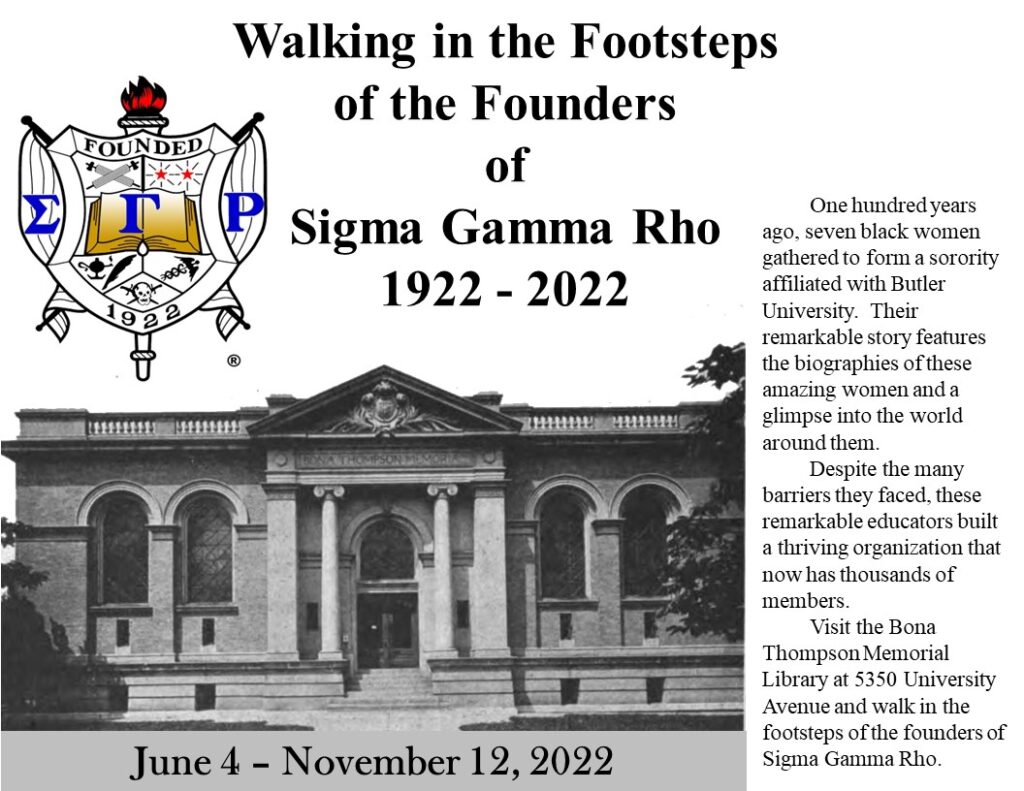
Project CRADLE Care was launched with the March of Dimes to address maternal and infant health disparities for Black women through community outreach, advocacy, and implicit bias training. In 2022 the Sorority celebrated its Centennial Anniversary at Butler University, and in partnership with the Indiana Historical Bureau a state historical marker was placed outside the Bona Thompson Memorial Center in the Irvington Historic District, marking the neighborhood where the founders organized in 1922.
Core Values, Motto, and Mission
Three tenets anchor every chapter, every line, every program:
- Sisterhood: a lifelong bond between women committed to greater service and greater progress.
- Scholarship: the founding profession of the seven Pearls and the standard every collegiate member meets.
- Service: tangible work in education, health, and family support across underserved communities.
The motto is Greater Service, Greater Progress, and the wider mission, repeated on the international site, is to enhance the quality of life for women and their families in the United States and globally through community service, civil and social action.
Symbols, Colors, and Sorority Traditions
Colors: Royal Blue and Gold
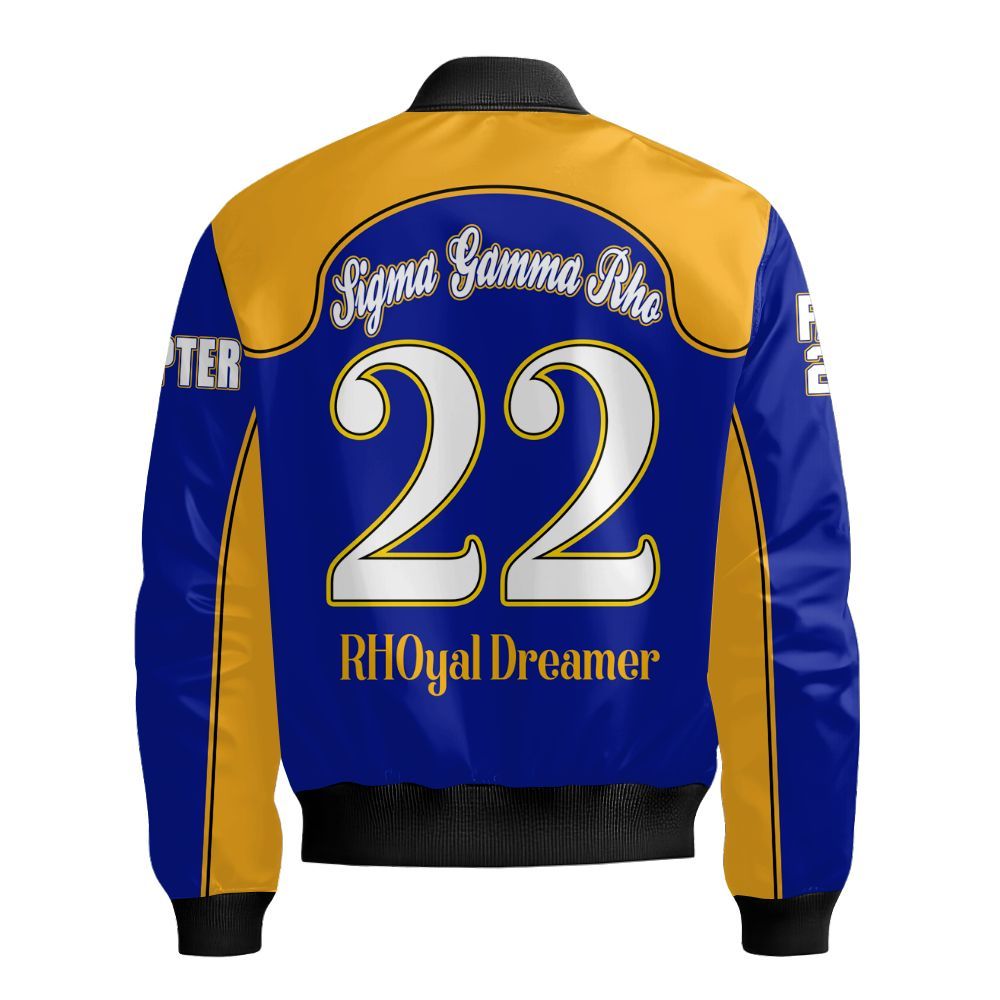
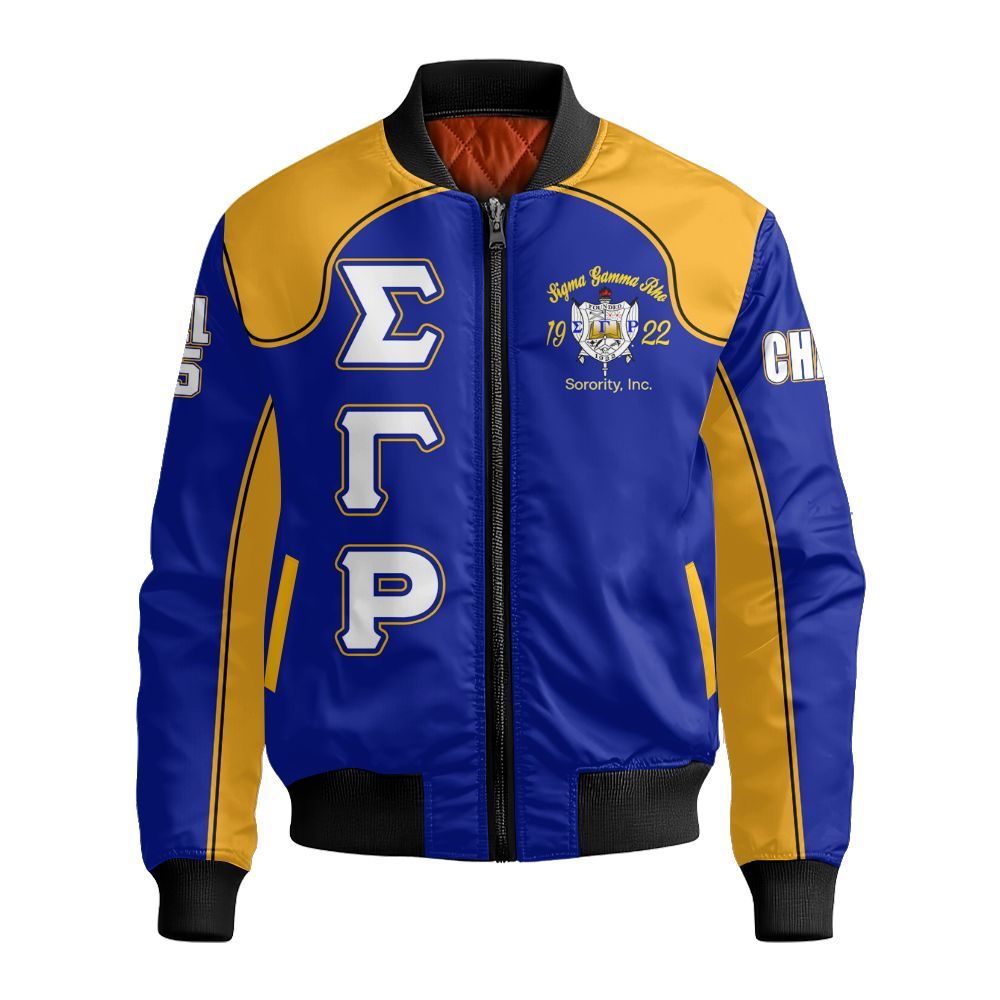
Royal blue and gold, the gold often rendered as a mustard yellow, are the fastest visual cue at any Divine Nine event. They show up on stoles at Founders Day services, on jackets at probate shows, and on the line jackets sorors wear long after graduation.
Flower: The Yellow Tea Rose
The yellow tea rose carries grace and quiet strength and appears in initiation ceremonies, in chapter installations, and in the floral tributes at memorial services for departed sorors. It is the answer to one of the most asked questions about the Sorority and one of the most recognizable florals across the Divine Nine.
Mascot: The Poodle
The poodle is the mascot of Sigma Gamma Rho, and the nicknames Pretty Poodles, Lady Sigmas, Sigma Women, and SGRhos all share the same poised, polished register the Sorority cultivates in its public image.
The Pearls and the Rubies
Ten pearls represent the seven founders together with the three virtues of faith, love, and hope. Two rubies represent achievement and light. Both stones appear on the Sorority’s coat of arms and on the official member pin.
The Aurora and Step Traditions
The Aurora has carried the Sorority’s record since 1927 and is the institutional voice on programs and convention coverage. On yards SGRho chapters are recognized for stepping and strolling, performance traditions that show up at probate shows, yard shows, and Greek picnics across the country.
Membership and the Path to Blue and Gold
Membership in Sigma Gamma Rho is by invitation only and is split between undergraduate and graduate intake. The cumulative grade point average required for membership is 2.5 on a 4.0 scale, and institutions may impose more stringent and additional requirements, which is the practical answer to whether SGRho is hard to get into. The standard itself is straightforward, but the chapter level expectations on leadership, service, and character can raise the real bar well above the minimum.
Undergraduate Membership
- Full-time enrollment at a four-year accredited college or university.
- Completion of at least one semester or quarter on that campus.
- A minimum 2.5 cumulative GPA, with chapter and campus overlays as applied.
- Demonstrated leadership, service, and strong character.
Graduate Membership
- A baccalaureate degree from an accredited institution.
- Intake conducted through alumnae chapters of graduate members.
- A record of academic achievement, leadership, and community service.
The Sorority is organized into five geographic regions: Central, Northeastern, Southeastern, Southwestern, and Western, and it boasts over 100,000 members across more than 500 undergraduate and alumnae chapters spanning the United States, Bermuda, The Bahamas, Canada, Germany, South Korea, the U.S. Virgin Islands, Tokyo, and the United Arab Emirates.
The National Programs That Carry the Mission
Sigma Gamma Rho’s national initiatives map directly to the three tenets:
- Operation BigBookBag: educational materials and school supplies for at-risk children in homeless shelters and extended-care facilities.
- Women’s Wellness Initiative: breast cancer awareness, domestic violence prevention, heart health, diabetes education, and mental health support for women of color.
- Swim 1922: the USA Swimming partnership that has reached nearly 20,000 youth with water safety and instruction.
- Project CRADLE Care: the March of Dimes partnership focused on maternal and infant health for Black women.
- Annual Youth Symposium: a second Saturday in March program covering drugs, violence, abuse, suicide prevention, human trafficking, and teen pregnancy.
- National Education Fund: scholarships and leadership development for students from all backgrounds.
- G.O.L.D.E.N. Charitable Foundation: a public service vehicle that supports women, children, and families in underserved areas.
Sigma Gamma Rho in the Divine Nine
Sigma Gamma Rho is the seventh sorority to join the National Pan-Hellenic Council, and one of nine historically Black Greek-letter organizations the public now calls the Divine Nine. The term was popularized by historian Lawrence Ross in his 2001 book on the history of African-American fraternities and sororities. The eight sister organizations are:
- Alpha Phi Alpha Fraternity, Inc. (1906)
- Alpha Kappa Alpha Sorority, Inc. (1908)
- Kappa Alpha Psi Fraternity, Inc. (1911)
- Omega Psi Phi Fraternity, Inc. (1911)
- Delta Sigma Theta Sorority, Inc. (1913)
- Phi Beta Sigma Fraternity, Inc. (1914)
- Zeta Phi Beta Sorority, Inc. (1920)
- Iota Phi Theta Fraternity, Inc. (1963)
The founding gap between SGRho and the rest of the council is part of the identity. Six of the nine were born at Howard, one at Cornell, one at Indiana University, and one, Sigma Gamma Rho, at Butler. SGRho members work alongside their brother and sister organizations on joint service events, NPHC step shows, and Black History Month programming on campuses nationwide.
Notable SGRhos and Modern Influence
The Sorority counts a long list of accomplished women across politics, the arts, education, and business. Hattie McDaniel, the first Black actress to win an Academy Award, carried SGRho letters; honorary members include hip-hop pioneer MC Lyte and actress Wendy Raquel Robinson, initiated during the 2022 Centennial Boulé. For the full list across entertainment, education, and politics, see our famous SGRhos roundup.
SGRho’s Affiliate Groups carry the Sorority’s reach beyond college campuses. Rhosebuds engage elementary-age girls between 8 and 11 in self-confidence and leadership activities; the Rhoer Club mentors teenage girls between 12 and 18 in academics, leadership, and community service; and the Philo Affiliates connect professional women to the Sorority’s national mission. The combination gives Sigma Gamma Rho a pipeline that stretches from grade school through retirement. More information on member programs and the centennial campaign sits on the official site at sgrho1922.org, and the broader council and its activities are tracked at NPHC headquarters.
Carrying the Royal Blue and Gold Forward
What began with seven Black women educators in an Indianapolis classroom in 1922 is now a global service network with more than a century of receipts: an Aurora founded in 1927, a national charter taken at Butler in 1929, an NPHC seat earned in 1937, a Swim 1922 program that has touched nearly 20,000 young swimmers, a CRADLE Care partnership for Black mothers and infants, and a 2022 Centennial that closed the loop back to the founding neighborhood. Sisterhood does not end at graduation. Graduate chapters and the Philo Affiliates carry the work forward, and every Founders Day the Sorority repeats the ten pearls and two rubies that hold faith, love, hope, achievement, and light. The royal blue and gold keep moving.