
How to Write a Greek Life Interest Letter That Stands Out

The Divine Nine interest letter is the first thing a chapter reads about you, and on most campuses it is the only document the membership committee has in front of them when they decide whether to invite you to the next round. It is shorter than people expect (rarely more than a single page), more specific than people expect (one chapter, one organization, named explicitly), and more first-person than the recommendation letters people sometimes confuse it with. This guide walks through what the letter actually is, the three-section structure that works every time, a full sample letter you can pattern yours on, the topics to never mention, and the small finishing touches that decide whether the chapter calls back.
What An Interest Letter Actually Is
An interest letter is a first-person letter from you to a specific Divine Nine chapter, telling them why you are interested in joining that organization and what you would bring to it. It is not a recommendation letter (which an alumna writes about you in the third person) and it is not a sorority packet cover letter (which goes to the women writing your NPC recommendations). Each of those documents has its own conventions. The NPHC interest letter is its own genre, addressed directly to the chapter you are applying to, and built around a single mission-fit argument. If the distinction between these documents is still fuzzy, the Divine Nine terminology glossary sorts out the related vocabulary before you start drafting.
The Three-Section Structure
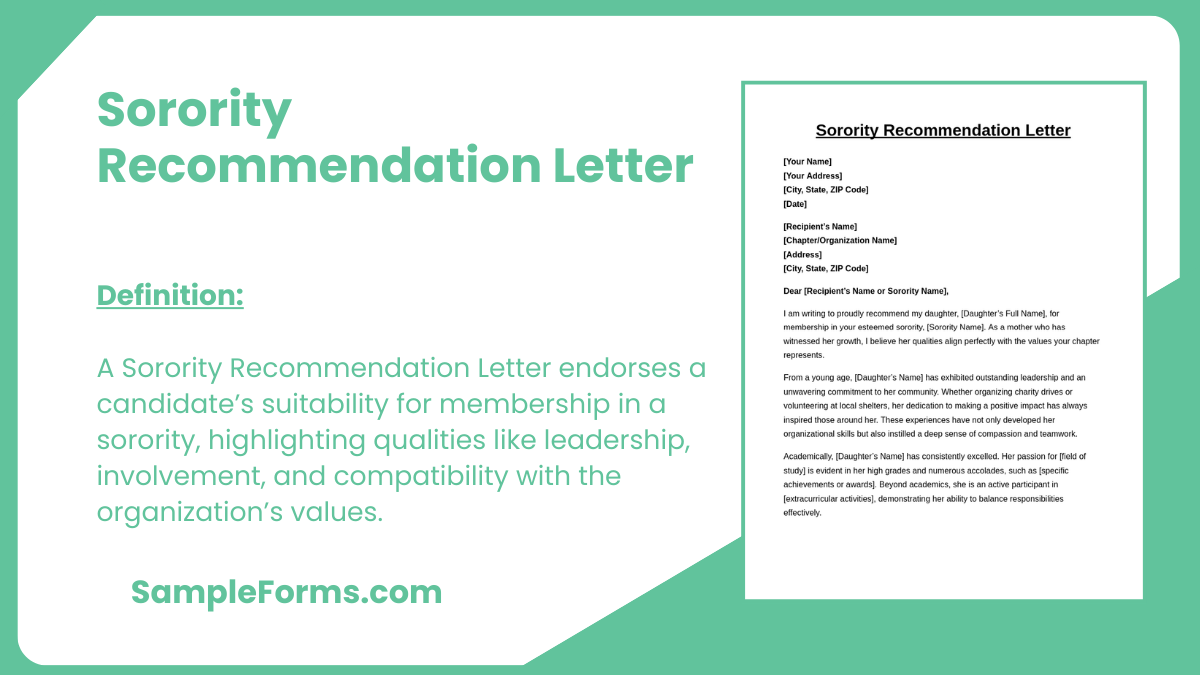
Across the published templates the structure is remarkably consistent. A short greeting and statement of purpose, a middle paragraph or two that connects you to the organization, and a closing that names the commitment you are willing to make. Treat each section as one paragraph and the whole letter will land in the single-page range that chapters expect.
Section One: Salutation and Statement of Purpose
Open with the explicit purpose of the letter. The standard sample line is some version of: the purpose of this letter is to inform you about my interest in becoming a member of [specific chapter name] of [full organization name with comma and Incorporated]. Name the chapter and the full organization name in the first sentence. Then in one or two more sentences, state why you sought out this organization specifically. Pull from the chapter’s actual values rather than generic Greek-life language.
Section Two: Why You and This Organization Fit
The middle section is the only section that gets two paragraphs if it needs them. Document the named external organizations you already belong to and the role you hold in each. List concrete activities, not just memberships. Mentoring children at a named program. Treasurer of a named volunteer chapter. Volunteer hours at a named local nonprofit. Each commitment should be paired with a one-line outcome (what you do there, who benefits), not just the organization’s name. The chapter is reading for evidence that you already live the values the organization talks about.
Section Three: Closing Commitment and Contact
Close with a single sentence about what you commit to if invited (upholding the reputation, exceeding the standards, contributing to specific programs the chapter runs). Then a sentence that pivots from “I” to “we” by framing membership as a collective effort, not a personal benefit. End with a polite line about looking forward to hearing from them. Beneath the signature, include your full name, the chapter you applied to, your phone number, and your email address.
A Sample Interest Letter, Annotated
The published sample below is for the Kappa Upsilon Chapter of Alpha Kappa Alpha Sorority, Incorporated. Read the structure, then adapt the specifics. Direct quotation from this exact letter is a known plagiarism risk because the sample is indexed online.
The purpose of this letter is to inform you about my interest in becoming a member of The Kappa Upsilon Chapter of Alpha Kappa Alpha Sorority, Incorporated. I sought out membership because the members exemplify the epitome of class, grace, and standards. My desire to inspire young girls and women and make a significant impact on their lives is just one of many reasons I aspire to join your great sorority.
I am a dedicated member of the National Council of Negro Women. I am on the Bethune Committee, where we focus on creating health programs for the organization and the community. I am a mentor with the Valdosta community organization G.O.L.F.E.R., a program that creates opportunities for the children at Hudson Dockett. I am the Treasurer and Public Relations chair for Students of American Red Cross, where we have raised money for disasters and continue to volunteer throughout the community. I also volunteer at the Boys and Girls Club, The Haven, and LAMP.
If I am chosen as a member of Alpha Kappa Alpha Sorority, Incorporated, I will work hard to uphold the reputation and exceed the standards that those before me have set. I believe becoming a member means joining a group of highly educated women that together are capable of facilitating the type of change that is imperative in today’s society.
Notice what the letter does and does not do. It names the chapter and the organization in the first sentence. It states one specific reason for interest. It lists four named external organizations with the candidate’s exact role in each. It closes with a commitment, not a request for sympathy. It does not list GPA, awards, or social-media credentials. The chapter has the application form for those.
The Five Things You Don’t Touch

There is a longstanding rule of thumb in NPHC and NPC circles about topics that have no place in a recruitment conversation. Apply the same filter to the letter itself.
- Boys. Romantic relationships, partners, or who you are dating belong nowhere in the letter.
- Booze. Drinking culture, party history, or anything that signals you see the chapter as a social outlet.
- Bible. Religious affiliations, even if the chapter has faith-based programming. Let the chapter raise that topic if it matters to them.
- Ballots. Partisan politics, specific candidates, or political endorsements. Civic engagement framed as service is fine; partisanship is not.
- Bucks. Family income, financial hardship, ability to pay dues. The chapter handles those conversations separately.
If any of these surface in a draft, cut the paragraph and rewrite it around the service work you can document instead.
Common Mistakes That Sink Otherwise Good Letters
Several recurring mistakes show up in interest letters that the membership committee was otherwise willing to read.
- Addressing the national organization instead of the chapter. The letter goes to the specific chapter on your campus. Name it.
- Listing memberships without roles. “Member of the NAACP” tells the chapter almost nothing. “Membership chair, campus NAACP chapter” tells them what you do.
- Quoting the founding principles back to the chapter. They wrote them. They know them. Cite values by demonstrating them, not by paraphrasing the website.
- Going over one page. The published guidance across multiple sources is unanimous: fit on a single sheet.
- Using the same letter for two chapters. Each chapter is its own audience, and committees compare notes more often than candidates realize.
- Mailing it casually. Most chapters expect the letter in a sealed envelope, sometimes hand-delivered at the informational. Find out the local convention before you guess.
Finishing Touches Before You Send
The structural work is done. What is left is the polish that signals you take the document seriously.
- Spell-check twice and have one other person read for typos.
- Sign the letter at the bottom in pen if you are printing it.
- Keep the formatting simple. One serif font, standard margins, no decorative elements.
- Confirm that the letter fits on a single sheet of paper when printed.
- Most chapters require the letter to be sealed in an envelope and mailed in (or delivered closed) to avoid tampering. Confirm your chapter’s protocol.
- Make a clean copy for your own records before you let the original out of your hands.
After You Hit Send
The letter is one input among several. The chapter will weigh it alongside your application, your interview, your visible involvement on campus, and the conversations you have had with members at public events long before the letter arrived. If you have built that record, the letter mostly confirms what they already suspect. If you have not, no letter is going to manufacture it. The Divine Nine intake guide covers the broader sequence the letter sits inside, from Convocation through education sessions and initiation. And if you are still narrowing down which chapter the letter should even go to, the decision framework for picking a D9 organization is the right step to take first.
Quick Letter-Writing Questions
- How long should the interest letter be?
- One single-spaced page, no exceptions. Three short paragraphs (greeting, body, closing) is the published norm. Anything longer signals you are unsure which sentences matter.
- Should I attach a resume to the interest letter?
- Only if the chapter asks for one in the informational. If the chapter does request a resume, attach it as a separate document, not as a continuation of the letter itself. The letter must still stand alone on one page.
- How do I write a strong opening line?
- State the purpose of the letter and name the specific chapter and full organization name in the first sentence. The sample interest letters that circulate online almost universally open this way, and the directness is read as confidence rather than abruptness.