

Every fall and spring, campuses across the country fill with anticipation for one of the most celebrated events in Black Greek letter organization life. New members who have spent weeks learning history, mastering traditions, and preparing routines finally get to step into the light. That moment is called a probate show, and for thousands of students who witness one for the first time, nothing quite compares to it.
A probate show is the formal public presentation of newly initiated members in a historically Black fraternity or sorority. Rather than a simple announcement or ceremony, it is a full performance that combines education, artistry, and deep cultural meaning. For the organizations of the National Pan-Hellenic Council, the probate has become the most anticipated event of any semester, a tradition that carries the weight of more than a century of Black Greek history.
Where the Word “Probate” Actually Comes From
The term carries more history than most people realize. Originally, “probate” was not the name of the show at all. It referred to the member of the Greek letter organization who was about to be initiated. Over time, as campuses across the East Coast developed a tradition of gathering to watch these new members perform, the term shifted from the person to the event itself.
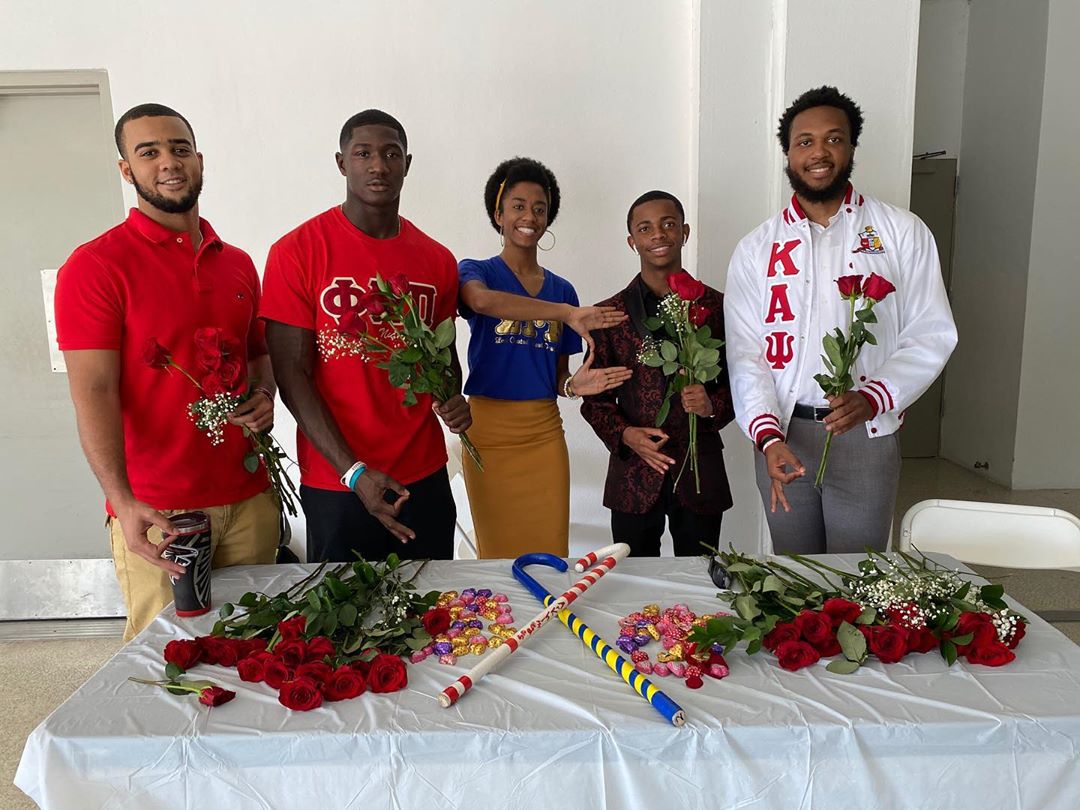
According to Walter Kimbrough, author of Black Greek 101, the presentation show had different names at different schools in the early 1960s. At Norfolk State University, the stepping style was known as “blocking” and the presentation itself was called a “Block Show.” As the format spread and the term caught on more widely, “Greek Shows” gradually became known as “Probate Greek Shows” by the 1980s. What started as a regional label eventually caught on nationwide.
The word traces back further still, to the concept of social probation, the period of time that prospects once endured before becoming members. That process involved rules, education, and traditions specific to each chapter, and the new members who had survived it were the probates. When those probates took center stage to demonstrate what they had learned, the show took on their name.
How Probate Shows Took Shape Over the Decades
The probate show in its current form is a relatively recent development, even though Black Greek organizations have existed since the early twentieth century. As far back as the 1930s, lines of new members performed in front of the student union, typically during the second week of November, dressed uniformly and ordered numerically as they recited their organization’s history. The format was structured and largely consistent across campuses.
That consistency began to shift during the 1960s, when predominantly white institutions started actively recruiting Black students through integration. This disrupted the development of pledging traditions at many schools and created a period of near-stagnation through the 1970s. In place of stagnation came expansion. The Civil Rights Movement and a growing sense of Black self-determination drove a surge in BGLO membership. Before 1969, for example, Alpha Kappa Alpha would introduce no more than five undergraduate chapters per year. Between 1969 and 1979, that number rose to at least ten annually, adding more than one hundred new undergraduate chapters in a single decade, primarily along the East Coast.
The most significant turning point came in 1989. Before that year, BGLO membership procedures were conducted publicly and stretched over extended periods of time. Following a tragic incident in which a young man died at Morehouse College, the organizations ended the above-ground pledge process. As Dr. Edwin Johnson, who teaches a Divine Nine history course at Morgan State University and holds a PhD focused on twentieth century African American history, put it: “Probate shows have become, in my mind, much more important now, because the legal above-ground pledge process ended actually when I was an undergrad in 1989.”
With the public pledge process gone, the probate became the first time a campus community would see new members reveal themselves to the yard. Everything that had once unfolded over weeks in public was now compressed into a single, charged event.
What Happens at a Probate Show
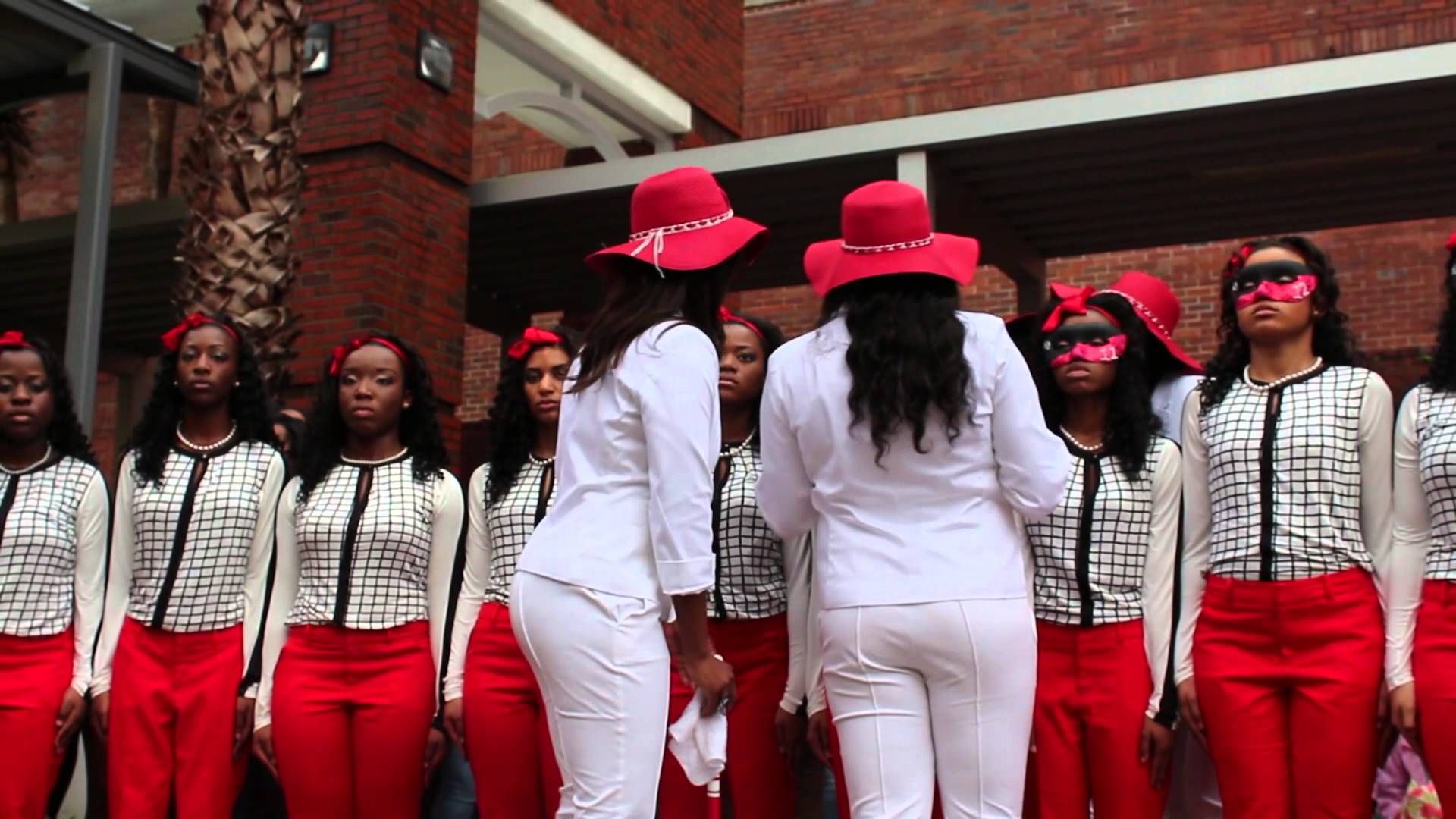
Typically held at the close of the fall and spring semesters, a probate show brings neophytes before fellow members, alumni, family, and friends to assert what they have learned and embrace their new position in the organization.
Laila Woodfork, then a senior and National Pan-Hellenic Council 1st Vice President of Delta Sigma Theta’s Jackson State University chapter, described it this way: “The probate show is a platform to present new Greek organization members to the campus and community. It gives an opportunity for new members to showcase what they have learned about their organization’s history, mission and goals.”
From before the start of the show to the final moment of the reveal, weeks of preparation go into each segment. “When you got to the part where you started practicing for probate, or ‘the great reveal,’ as we call it, you knew that all of your hard work paid off, and that this was your moment to celebrate and reveal yourself to everyone,” Woodfork said. “Practicing made me build connections with my sisters, and get to know them more and have more fun with them.”
The Four Components That Hold the Show Together
While every organization brings its own style to the floor, most probate shows follow four main components that preserve the tradition across chapters and campuses.
The show opens with the greeting, in which new members address their organization and acknowledge those who guided them through the membership process, including brothers, sisters, or a regional director. This is followed by the presentation of chapter history, where neophytes recount their organization’s story for the audience assembled in the room or outdoor space.
The most visually striking segment is the step and stroll. Understanding what stepping in Greek life involves helps clarify why this portion carries so much weight, as does knowing how the culture of strolling developed separately within different organizations. Each brings a unique combination of choreography, chants, and footwork to the floor in service of its distinct identity. Throughout all of this, new members keep their identities concealed using variations of masks, hoods, sunglasses, veils, or makeup.
That concealment lifts at the final moment. New members reveal themselves and officially cross into their organization, followed by a group hymn sung together with their chapter. For those watching, it is the emotional peak of the entire event.

Why Probate Shows Mean So Much to Black Greek Culture
The probate show carries weight that goes far beyond performance. It is a transfer of history between generations of members who have committed to something larger than themselves.
Dr. Johnson put it plainly: “You’re becoming a part of something greater than yourself.” He emphasized that each component must be executed with care: “Those people that you’re becoming a part of want to make sure that you’re coming in the right way, that you’ve got all of the traditions, the rituals, the history, the significance of the chapter, the history of the chapter, who were the people made at this chapter that made significant contributions.”
Langston Fraley, then chapter president of Alpha Phi Alpha at Morgan State University, had his first probate experience watching his older brother join Iota Phi Theta through an Instagram Live stream while he was still in high school. Even through a phone screen, the moment landed. “And then after that, the next probate that I was actually able to see, I was actually a part of, which is absolutely a blessing,” he said. After crossing himself, Fraley reflected: “I feel like probates in itself, really are Black culture. I feel as though the consistency of the probates and the presentations are what keep us going, keep us inspired, and keep us looking towards more great things that we can achieve in our young lives as Black men and women.”
Esrie Jackson, a Zeta Phi Beta member at Fort Valley State University whose probate show went viral on social media, described what it meant to perform for the crowd: “I was very proud of myself because growing up I didn’t really have anybody that looked like me doing things in that manner. I felt like okay, this would be a good way to show girls that look like me that anything you want to do you can do.”
For anyone familiar with the history of Black fraternities and sororities in America, the probate sits at the intersection of individual achievement and collective legacy, the moment a new member stops being a prospect and becomes part of a living tradition that stretches back more than a century.
What to Know Before You Attend
Probate shows draw large crowds, and the energy in the room can range from quiet reverence to electric celebration depending on what is happening on the floor. Knowing how to navigate that range makes the experience better for everyone.
Arriving early is the single most practical step. Seating fills up quickly, and good sightlines are not guaranteed if you wait. Bringing something to cool down, like a small fan or a cup of ice, is worth considering for events held outdoors or in warm indoor spaces where the crowd packs in tightly.
When new members are reciting their organization’s history or performing a group hymn, keeping the noise down shows respect for both the performers and the tradition. There are plenty of moments in a probate where cheering loudly is exactly right, and reading the room will make clear which moments those are. Showing up with paraphernalia from the new member’s organization is a welcome gesture, and coming with others rather than alone adds to the collective support that makes these events memorable.
Frequently Asked Questions
When does probate season happen?
Probate shows typically take place at the close of the fall and spring semesters, when organizations wrap up their intake processes and new members are ready to present themselves to the campus community. In earlier decades, probates were almost always held during the second week of November, but today the schedule varies by chapter and school.
What does it mean to “cross” in a Black Greek letter organization?
Crossing refers to the moment a new member officially becomes a full member of their organization. At a probate show, the reveal at the end of the performance marks this transition publicly, as neophytes remove their concealment and step forward to acknowledge their new brothers or sisters for the first time.
Can non-Greek students attend a probate show?
Most probate shows are open events on campus, and non-members frequently attend. For many students, watching a probate is their first real encounter with BGLO culture, and it often sparks genuine interest in learning more about the Divine Nine and what these organizations stand for.
How long does a probate show usually last?
The length varies depending on the organization and the size of the line, but most probate shows run between one and three hours. Larger lines with more elaborate performances tend to run longer, and some chapters add additional segments beyond the standard four components.
What It All Comes Down To
A probate show is many things at once. It is a performance, a ritual, a history lesson, and a celebration. But more than any single label, it is the moment a new member’s private journey becomes public. Weeks of learning, rehearsing, and bonding with a line of brothers or sisters culminate in a show that affirms who they are and where they stand.
As Woodfork said of her own experience: “I don’t take it for granted. Because as people who came before me always say, ‘many are called, few are chosen.’ So you have to just live in this moment and know that this is your moment and this is where you’re supposed to be.”
Whether you are watching for the first time or stepping into the light yourself, the probate show is Black Greek culture in its most visible form, a tradition built over generations and carried forward by every new member who takes the floor.