
Why Were Black Greek Organizations Founded

The question of why Black Greek organizations were founded usually gets answered with a short version: Black students were excluded from white fraternities, so they built their own. That answer is true, but it flattens what was actually a layered, decade-by-decade response to specific forms of campus exclusion. The students who founded the nine organizations now known as the Divine Nine were not reacting to a single closed door. They were navigating a system in which nearly every structure that made college work for white students was unavailable to them.
Understanding the founding of these organizations means looking at each of those structures individually, because each one explains a different part of what BGLOs were built to replace and why their mission still looks different from their white counterparts today.
The Specific Exclusions Black Students Faced on Campus
By the early 1900s, a small but growing number of Black students were enrolling at universities outside the South. Cornell, Indiana University, Butler, and a handful of other predominantly white institutions admitted them. Howard University and other historically Black institutions provided a parallel system in the South. On either type of campus, the formal admission was only the start of the problem.
The first form of exclusion was social. Greek-letter organizations on white campuses were not merely social clubs. They controlled who attended which parties, who sat at which dining tables, who got invited home for the holidays, and who learned the unwritten rules of how to move through a university. Locked out of those networks, Black students lived on the same campuses as their white peers while functionally inhabiting a different one.
The second form was academic. White fraternities ran something close to formal academic support: shared notes, old exam files passed from older members to newer ones, study groups that ran nightly during midterms, and informal tutoring from upperclassmen who had already taken the same courses. Black students arriving at predominantly white campuses found themselves outside this system entirely. The students who founded Alpha Phi Alpha at Cornell in 1906 began as a literary and study group for exactly this reason. They were not trying to throw better parties. They needed to share notes.
The third form was residential. Many universities of the period offered no on-campus housing to Black students, or housed them in segregated quarters. Where chapter houses existed for white fraternities and sororities, no such option existed for Black students. The Greek plots that NPHC chapters still maintain today on many campuses are partly a legacy of this: the outdoor common ground that Black Greek organizations could claim when the indoor common ground was denied.
The fourth form was professional. White Greek-letter organizations operated, then as now, as professional pipelines. Alumni hiring networks, internship referrals, and access to the senior figures in any given industry ran through chapter loyalty. A Black student in 1910 could earn the same grades as his white classmates and still graduate into a labor market that had no entry points for him. The founders of Kappa Alpha Psi at Indiana University in 1911 understood that whatever they built had to address this directly, which is why the fraternity’s motto came to be “Achievement in Every Field of Human Endeavor.”
The fifth form was the absence of faculty mentorship. Black students at PWIs rarely had Black professors, and white faculty engagement with them varied widely. At HBCUs the situation was different, but even there the professoriate was small and the demand for guidance outstripped the supply. The organizations that grew at Howard, in particular, often drew their early energy from faculty members who became deeply involved with new chapters and treated mentorship of members as part of their professional work.
The Pattern of Building Institutions in Response to Exclusion
The instinct to build a parallel institution rather than petition for inclusion did not start with Black Greek life. It followed a pattern that women had already established a generation earlier. When fraternities formed as exclusively male spaces in the mid-19th century, women responded by founding their own sororities rather than waiting for the existing organizations to admit them. The Kappa Alpha Theta sorority was founded at DePauw University in 1870 for that reason.
Black students were following the same logic but under harder conditions. The exclusions stacked on top of one another, and the institution-building had to address all of them at once, not just the social piece. That is why the organizations that emerged were never single-purpose social clubs. From the beginning, they had to function as study groups, professional networks, housing alternatives, mentorship structures, and community institutions at the same time.
This is one of the clearest reasons that BGLOs developed differently from their white counterparts. White Greek organizations could afford to specialize in social life because the other supports their members needed were already provided by the institution. Black Greek organizations could not specialize because nothing else was there.
The Founding Mission That Separated BGLOs From Their White Counterparts
Once these organizations existed, the founders made a series of choices that shaped what membership in a Black Greek organization would mean across generations. Three of those choices stand out.
The first was that service to the broader Black community was written into the founding mission rather than added later. Delta Sigma Theta, founded at Howard University in 1913, marched in the Women’s Suffrage March in Washington one week after its founding. That march was not a stunt. It was the sorority publicly declaring what kind of organization it intended to be. The founders treated political advocacy as constitutive of the organization rather than as an optional extracurricular.
The second was that membership was structured to last for life. NPC and IFC organizations of the same era treated membership as a four-year affiliation that ended at graduation, with optional alumni involvement. NPHC organizations treated graduation as the start of a member’s most productive years, not the end of involvement. Graduate chapters were not an afterthought. They were built into the design.
The third was that uplift of the broader Black community was treated as the reason the organization existed at all. White Greek organizations of the period were not built to fix anything beyond their own members’ social lives. Black Greek organizations were built to address the specific conditions that had made them necessary in the first place: the exclusion of Black Americans from full participation in education, professional life, civic engagement, and public institutions. The founding philosophy of Phi Beta Sigma at Howard in 1914 made this explicit. The fraternity declared that it should be integrated into the surrounding community rather than set apart from it, an unusual stance for a Greek-letter organization of any tradition.

Why the Founding Conditions Still Define BGLOs Today
The most common misunderstanding of Black Greek life is that the conditions of its founding are over, so the founding mission is now a matter of tradition rather than necessity. The members and the chapters do not generally see it that way, and there are concrete reasons for that.
The original conditions changed in degree, but not in kind. Black students at predominantly white institutions in 2025 are no longer formally barred from white fraternities and sororities, but Black enrollment at most PWIs is still small enough that the social, academic, and professional gaps the original founders identified continue to operate, just less openly. The role of an NPHC chapter at a PWI today is recognizably the same role as the chapters in 1910: providing community, academic support, professional networking, and cultural continuity in environments that do not otherwise provide them.
The service mission also remains active because the problems it was built to address are not over. Voter suppression has reorganized rather than disappeared. The wealth gap that the founders saw as an inevitable byproduct of professional exclusion has widened in some measures. Public schools serving majority-Black neighborhoods still face the same kinds of resource shortages that the original AKA chapters were addressing through their early library and education work. The specific issues change. The structural conditions do not, and the founding mission still translates onto them.
For a fuller picture of how this founding mission expressed itself in the most consequential American social movement of the 20th century, see the Divine Nine’s role in the Civil Rights movement. For the full chronological story of the nine organizations from Cornell in 1906 to Morgan State in 1963, see the history of Black fraternities and sororities in America.
Common Questions About Why Black Greek Organizations Were Founded
What were Black Greek organizations founded in response to?
They were founded in response to a layered system of campus exclusion: social isolation from existing fraternities and sororities, academic exclusion from informal study and notes-sharing networks, residential exclusion from chapter housing, and exclusion from the alumni-driven professional pipelines that white Greek organizations operated. The founders built organizations that addressed all of these gaps at once.
Why did Black students not just push for admission to existing fraternities?
Because the exclusion was both formal and structural. White Greek-letter organizations of the early 1900s did not admit Black students as a matter of policy, and the broader culture of those organizations was tied to a racial hierarchy that admission alone would not have undone. Building parallel institutions was the faster and more durable response, and it followed the same logic that women had used a generation earlier when they founded sororities rather than waiting for fraternities to admit them.
Was the founding purpose only about race?
No. Each organization was founded with a specific mission rooted in race but extending into scholarship, leadership, service, and a particular vision of community responsibility. The founders treated all of these as inseparable, and they wrote the service and uplift mission into their organizations’ founding documents in ways that white Greek-letter organizations of the same era did not.
Are the founding conditions of BGLOs still relevant?
Yes. The conditions that drove the founding have changed in form but not entirely in substance. Black students at PWIs still face the kinds of social, academic, and professional gaps that the founders identified. The chapters that operate today take on those gaps in the same way the original chapters did, even if the specific tools and platforms have changed.
How many Black Greek organizations were founded in total?
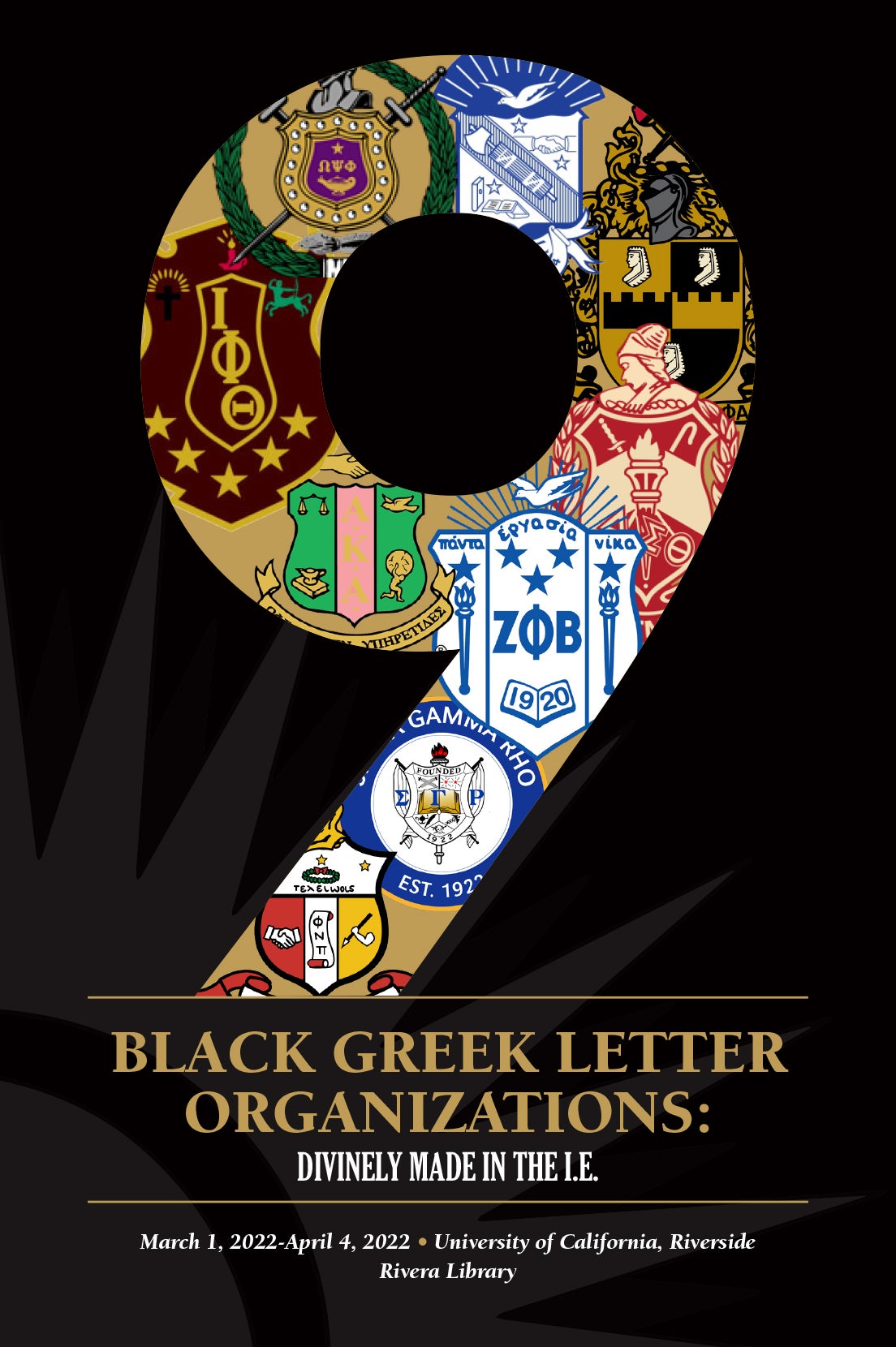
The nine organizations of the National Pan-Hellenic Council are the most widely recognized. Beyond the NPHC, additional Black Greek-letter organizations exist, including service fraternities, professional fraternities, and band sororities founded over the same century. The NPHC nine are the ones collectively known as the Divine Nine.
Founded for a Reason That Has Not Expired
The founding of Black Greek organizations was not an act of preference. It was an act of necessity, carried out by students who had identified specific structural failures of American higher education and decided to build something to fill those gaps. The fact that the nine organizations they founded are still operating, still recruiting, still graduating members into professional life, and still doing community work more than a hundred years later is not an accident of inertia. It is a sign that the original problem the founders identified did not fully resolve, and that the institutions they built continue to do work that nothing else has stepped in to do.
That continuity is why the founding story still matters. Members today carry the letters that students at Cornell, Howard, Indiana, Butler, and Morgan State wore for the same reasons those students wore them: because the system around them did not provide what they needed, and because building their own institutions was the only way to make sure those needs were addressed for the next generation.