
Kappa Alpha Psi Fraternity: A Complete Guide to History, Traditions, and Culture

Kappa Alpha Psi was founded on January 5, 1911 at Indiana University Bloomington in a state where Black students could not live in dormitories, use most campus facilities, or play contact sports. Ten men decided a fraternity could fill the social void racism had carved out for them, and from that decision grew the second oldest historically Black collegiate fraternity in America and the first to be incorporated as a national body. Today Kappa Alpha Psi counts more than 250,000 members across 700 chapters and thirteen international affiliates, all under the motto “Achievement in Every Field of Human Endeavor.” This guide walks through the founding history, the symbols and traditions that define Kappa culture, and the brothers who carried both into the world.
Founding History at Indiana University in 1911
Indiana became the nineteenth state of the Union in 1816 and founded Indiana University in Bloomington four years later. The town was settled largely by Southerners, the Ku Klux Klan held it as a stronghold, and lynchings of Black residents were not unusual. Black students made up less than one percent of the campus. They were barred from the dormitories, denied off-campus housing, refused use of university facilities, and shut out of every contact sport. Track and field was the only athletic program open to them.
Two Indiana University students, Elder Watson Diggs and Byron Kenneth Armstrong, had transferred from Howard University, where they had encountered the only national Black Greek-letter fraternity then in existence. They brought the idea back to Bloomington. Eight other men met with them and committed to building something new: John M. Lee, Henry T. Asher, Marcus P. Blakemore, Guy L. Grant, Paul W. Caine, George W. Edmonds, Ezra D. Alexander, and Edward G. Irvin. While they organized, the group went by the temporary name Alpha Omega, an explicit nod to the Greek alphabet’s first and last letters and to the Founders’ Christian faith.
The fraternity was formally chartered on January 5, 1911 as Kappa Alpha Nu. On May 15, 1911, the Indiana Secretary of State incorporated the organization, making Kappa the first incorporated Black fraternity in the United States and the first intercollegiate fraternity to be incorporated as a national body.
From Kappa Alpha Nu to Kappa Alpha Psi
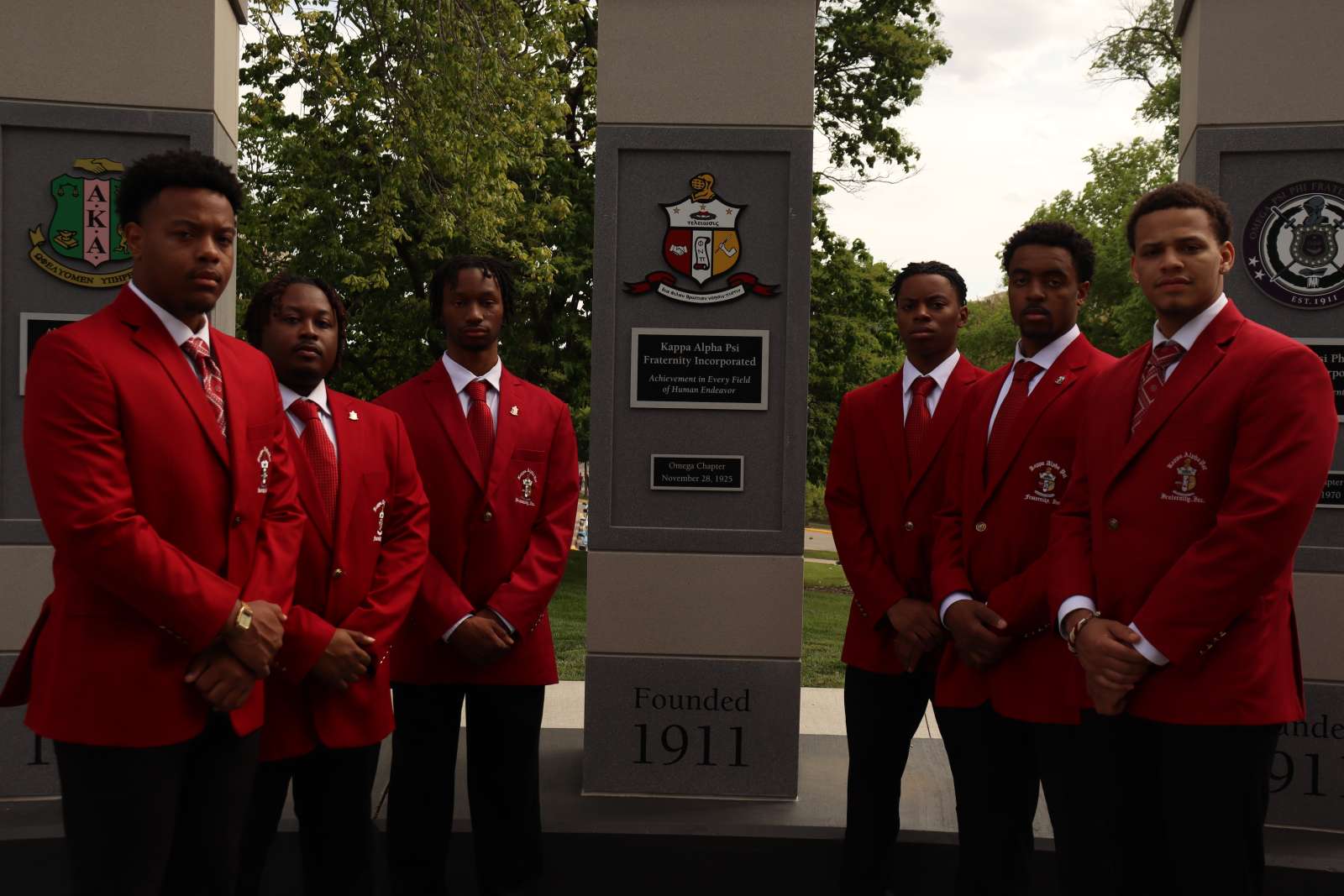
The original name Kappa Alpha Nu was, by one account, a tribute to a 1903 group of Black Indiana University students known as the Alpha Kappa Nu Fraternity. The name carried two problems. The acronym “KAN” got confused with the state of Kansas, and during a track meet a White student was overheard turning the fraternity’s name into a racial slur. The Founders moved quickly. At the Grand Chapter Meeting in December 1914, the body resolved to change the name. The letter Psi replaced Nu, and on April 15, 1915 the fraternity officially became Kappa Alpha Psi. The earlier name still lives on in the nickname members carry to this day: Nupes.
Colors, Symbols, and the Iconic Cane
Kappa Alpha Psi’s identity travels through a small set of objects every Nupe learns to recognize.
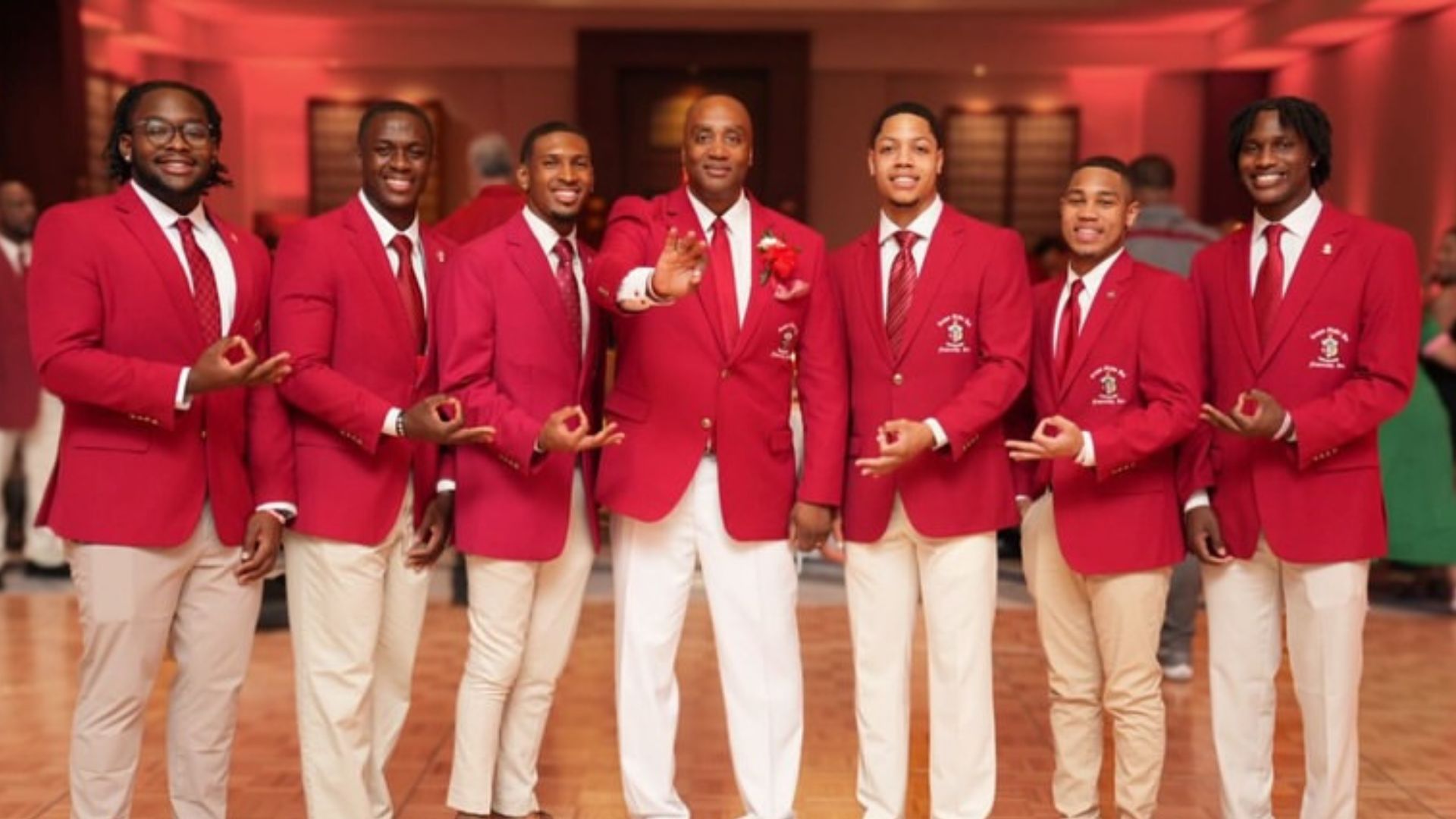
Colors: Crimson and cream. The pair shows up on jackets, line jackets, paraphernalia, and chapter regalia across every province.
Badge: A diamond-shaped pin bearing a raised black scroll with the Greek letters ΚΑΨ.
Symbol: The Kappa Kane, a walking stick that doubles as a performance prop in step shows.
Flower: The red carnation.
Motto: “Achievement in Every Field of Human Endeavor.”
Secret phrase: Phi Nu Pi (ΦΝΠ) carries a deeper meaning known only to initiated members.
Above the symbols sits the leadership structure. The president of the national fraternity is the Grand Polemarch. The country is divided into twelve provinces, each led by a Province Polemarch, from the Northern province through the Middle Western, including international territory in the United Kingdom, Germany, South Korea, Japan, and South Africa.
Traditions: Cane Stepping, The Journal, and Branding
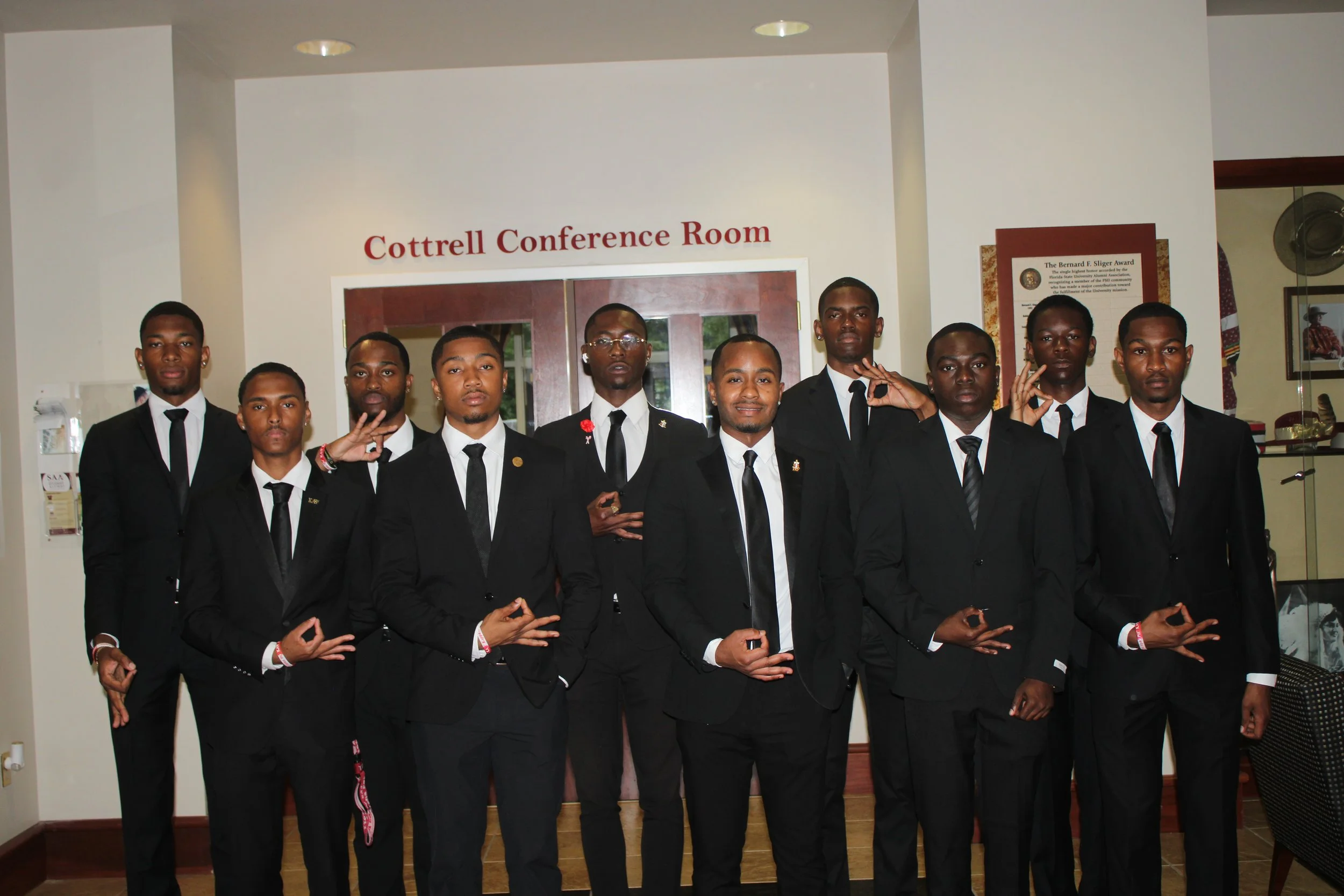
Cane stepping: When Black Greek organizations built the modern step show in the 1950s, Kappa Alpha Psi brought its kane into the routines. The choreography moved from long-cane taps in the 1950s and 1960s to the short-cane twirl that defines it today, and the national fraternity did not officially recognize cane stepping as a Kappa tradition until its 66th national meeting in 1986. The full story, from gentlemen’s-fashion origins to modern wrapping and chapter-custom designs, sits in our Kappa Kane history.
The Kappa Alpha Psi Journal: The fraternity’s official magazine launched in April 1914 as The Kappa Alpha Nu Journal, making it one of the earliest sustained publications among Black Greek-letter organizations. It has been printed continuously except for 1918 and 1919, when World War I interrupted production. The Journal now runs four times a year (February, April, October, and December). Its first editor, Frank M. Summers, later became the fourteenth Grand Polemarch.
Branding: Many Kappa men historically chose to be branded with the fraternity’s Greek letters after initiation, calling the practice “getting hit.” Brothers who declined were known as “naked brothers.” Some accepted one brand over the heart; others received three, one on the chest and one on each arm. Coat hangers or branding irons were used. The custom is older than the modern conversation about hazing, and it overlaps with similar customs across NPHC.
Service Culture: Guide Right, Kappa League, and the Foundation
Service has been built into the fraternity since its first decade. Leon Walker Steward proposed Guide Right at the twelfth Grand Chapter Meeting in 1922, and it became Kappa’s national service program for the educational and occupational guidance of youth. Guide Right today is organized into five national initiatives:
- Kappa League, the flagship leadership development series for young men in grades 6 through 12. The League was founded on February 12, 1970 by the Los Angeles Alumni chapter under Steward, who brought the idea west from Dayton, Ohio.
- Jr. Kappa League, the younger-grade counterpart.
- The A-MAN Program.
- St. Jude Children’s Research Hospital partnership, which Kappa chapters have backed with more than one million dollars in fundraising.
- Kappa Kamp, which sends inner-city boys to summer camps across the country.
The Kappa Alpha Psi Foundation was established in 1981 as a 501(c)(3) under twenty-third Grand Polemarch Oliver S. Gumbs, originally to fund a headquarters renovation. It now supports scholarships, after-school programs, and projects like Habitat for Humanity. The fraternity also runs a Student of the Year competition that judges members across six areas: scholarship, talent, community involvement, poise and appearance, career preparation, and model chapter operation. The first pageant was held on May 20, 1972 at Drexel University.
Notable Kappa Men Across Every Field
The fraternity’s motto, “Achievement in Every Field of Human Endeavor,” is borne out by a roster that touches every public arena. NBA legends Wilt Chamberlain, Bill Russell, and Oscar Robertson carried Kappa letters; so did tennis champion and activist Arthur Ashe, NFL coach Mike Tomlin, attorney Johnnie Cochran, filmmaker John Singleton, and BET founder Bob Johnson. For the full roster across sports, politics, law, entertainment, and gospel, see our famous Nupes roundup.
The Kappa Legacy Continues
More than a century after ten students at Indiana University refused to accept the social margins their campus had drawn around them, Kappa Alpha Psi remains a working answer to that founding question: what happens when achievement is taken seriously as a shared discipline. The colors, the kane, the Journal, and Guide Right are not decoration. They are the carriers of a culture that still moves through 700 chapters, twelve provinces, and thirteen countries, and that still produces the kind of brothers whose names anchor the lists above.
Quick Answers About Kappa Alpha Psi
Why are members of Kappa Alpha Psi called Nupes?
The nickname comes from the fraternity’s original name, Kappa Alpha Nu. After the 1915 name change to Kappa Alpha Psi, the “Nu” survived in the way members refer to one another.
When and where was Kappa Alpha Psi founded?
Kappa Alpha Psi was founded on January 5, 1911 at Indiana University Bloomington by ten men, originally under the name Kappa Alpha Nu. The Indiana Secretary of State incorporated the fraternity on May 15, 1911.
What does the Kappa Kane symbolize?
The Kappa Kane is the fraternity’s official symbol and the centerpiece of its cane stepping tradition. It moved from longer 1950s canes to the shorter, fraternity-colored canes brothers twirl in modern step shows.
Does Kappa Alpha Psi still grant honorary membership?
No. The fraternity no longer bestows honorary membership. Active candidates must hold at least a 2.5 GPA, and alumni-level candidates must have a bachelor’s degree from an accredited college or university.